Nov 2026
While public discussions about water pollution usually focus on microplastics, macroplastic pollution in our rivers represents the real root of the issue. We often picture microscopic particles invisibly drifting through marine ecosystems, threatening wildlife and entering the food chain. That danger is real, but understanding how to stop it requires looking upstream at what actually enters our waterways.
The common assumption is that rivers are mostly flushed with tiny, invisible fragments. The physical evidence collected directly from the water reveals a very different reality.
In an extensive multi-river study published in the Journal of Environmental Management, researchers from the UC Santa Barbara Benioff Ocean Science Lab evaluated cleanup operations across eight major river systems. Over the course of the multi-year program, teams removed 3.8 million kg of plastic waste.
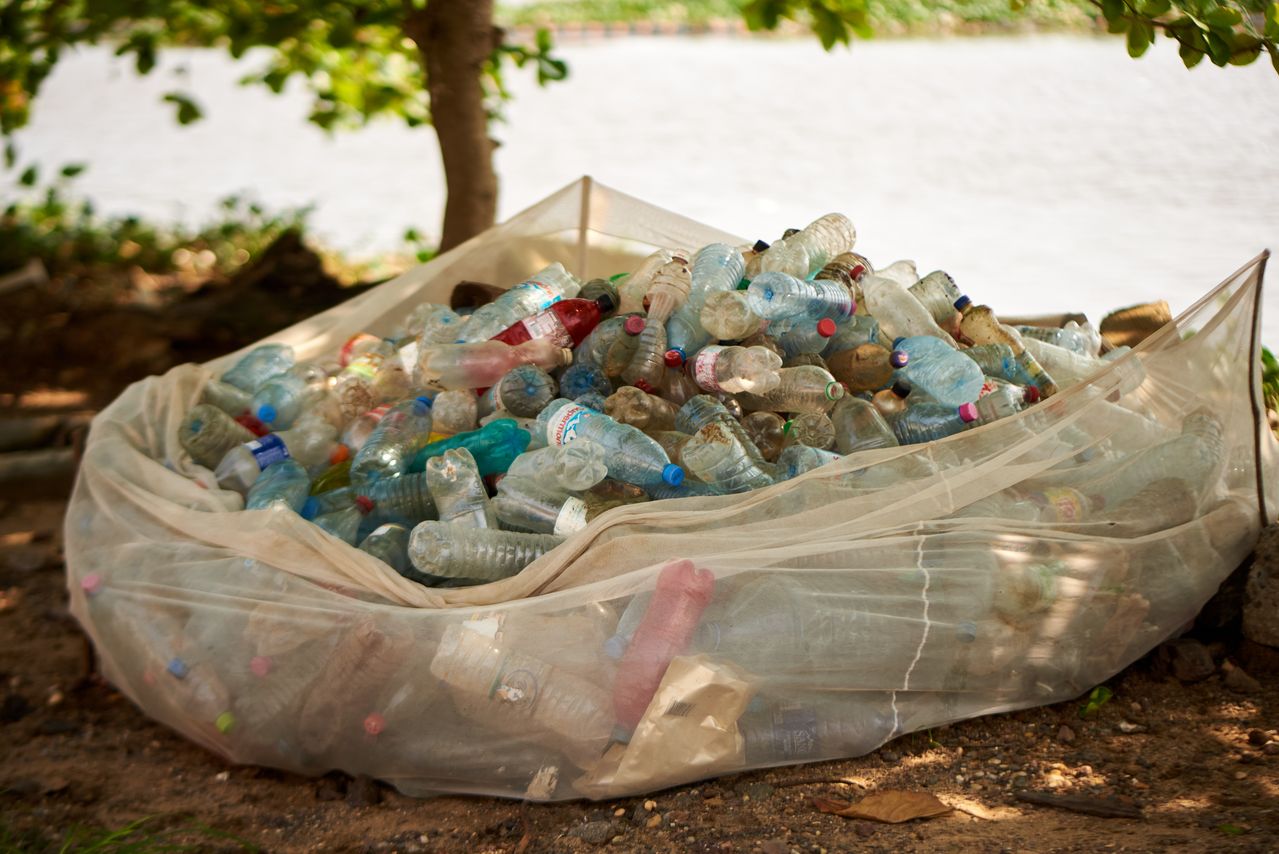
When the collected debris was analyzed, the data showed that 66% of the river plastic debris was macroplastic. Nearly two-thirds of the trash consisted of large, intact items like beverage bottles, food containers, shopping bags, and consumer packaging.
(Note: While broader global models estimate that rivers carry around 1.95 million tonnes of plastic each year, researchers treat that global total as a preliminary figure. The compositional breakdown of what is actually floating in these rivers, however, is concrete).

The Math of Stopping Macroplastics at the Source
Microplastics do not emerge out of thin air. Almost every microplastic particle in an aquatic ecosystem started life as a whole product: an intact water bottle, a takeout tub, or an industrial bucket. Over weeks and months, exposure to solar UV rays, riverbed rocks, and hydraulic friction batters these items, splintering them into thousands of tiny pieces.
Once a single container shatters into microscopic flakes, mechanical cleanup becomes nearly impossible without trapping plankton, small fish, and beneficial aquatic vegetation.
Because 66% of analyzed river debris is still whole and buoyant, inland waters represent a critical window of intervention. Rivers act as natural funnels. If we intercept waste while it is concentrated in a river channel, we permanently eliminate the microplastics that bottle would have created down the line.
Real-World Interception: Putting Tech on the Water
Targeted cleanup technology focuses on stopping the problem before dispersion occurs. Autonomous and hybrid surface vessels are built around this exact principle:
- Agile containment: In busy urban waterways like Canary Wharf in London and the historic canals of Zaanstad, compact drones like the WasteShark manoeuvre into tight corners, docks, and canal edges. They scoop up buoyant containers, packaging, and biomass before items drift out to open water.
- Industrial scale where volume spikes: In broader ports, river mouths, and commercial harbor corridors, larger workhorses like the MegaShark provide the high payload capacity needed to capture dense industrial debris and heavy volumes of floating plastic before river currents can flush them seaward.
- Protecting local habitats: Projects like the educational deployment at Hudson River Park demonstrate how removing whole waste early protects vulnerable estuarine sanctuaries from physical harm and animal entanglement.
Recovering 3.8 million kg across multiple river systems proves that at-source cleanup is a viable, high-impact strategy. By focusing our efforts on scooping up macroplastics upstream, we turn off the tap on microplastics downstream.
The Critical Role of Urban Waterway Infrastructure
Preventing inland debris from reaching marine sanctuaries requires active maintenance across municipal canals, stormwater outlets, and industrial docks. Because macroplastic remains buoyant during early transport, deploying surface interceptors allows port authorities and city managers to clear tons of waste with minimal energy and labor, permanently reducing downstream remediation costs.
Source Data:
UC Santa Barbara Benioff Ocean Science Lab, Journal of Environmental Management.