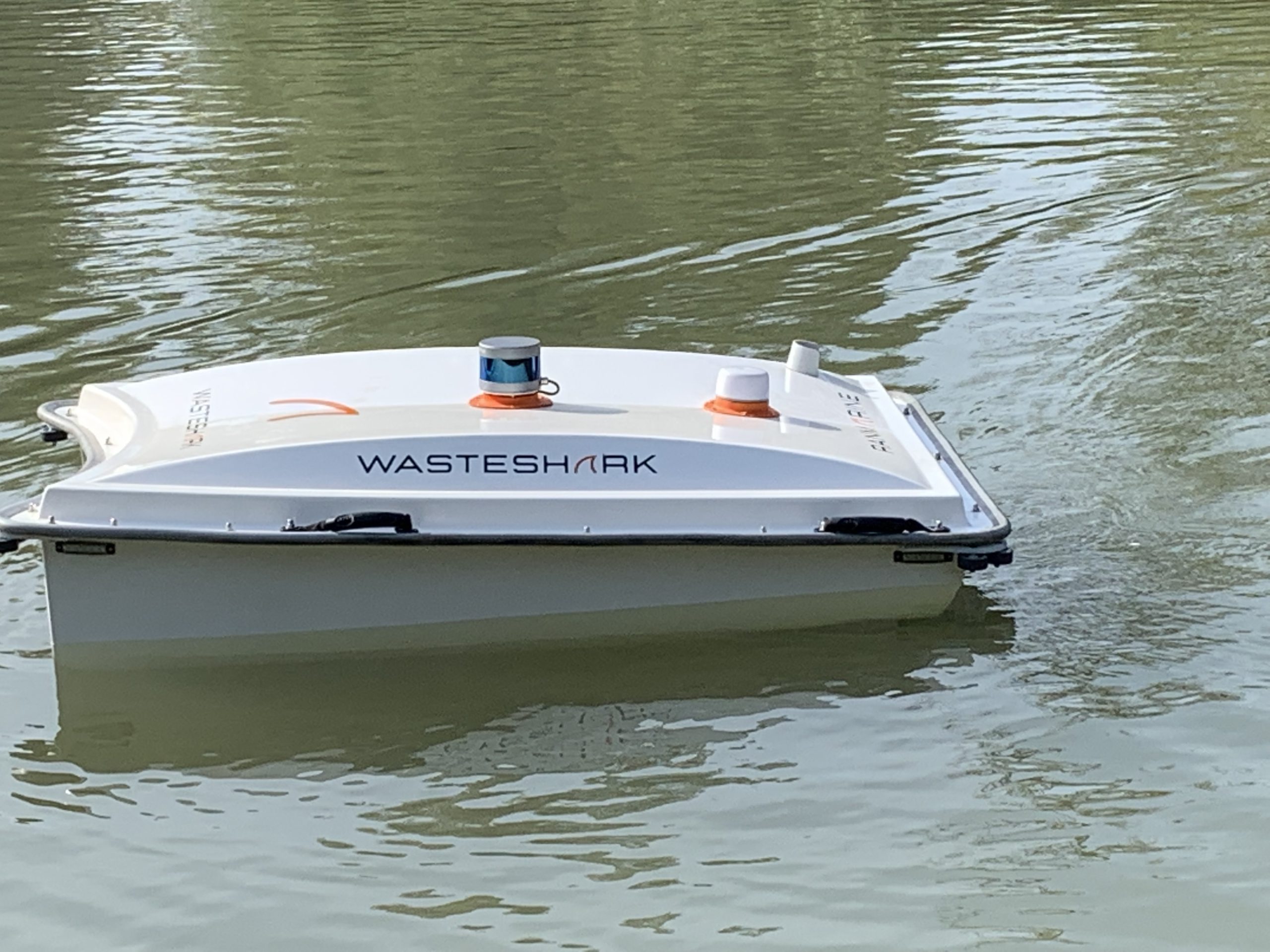
Meet WasteShark, the aquadrone taking a bite out of plastic waste
Entrepreneur Richard Hardiman sketched the inspiration for his plastic-grabbing aquadrone, WasteShark, while sipping coffee outside near a South African waterway.
It was there he watched a boat crew cruise around the basin, scooping up empty water bottles and other debris with what amounted to a net you’d use to clean a swimming pool. “I kept wondering how I could do the job more efficiently. The idea wouldn’t go away for months,” he recalled in a conversation with me last week.
Roughly eight years later, after developing YouTube-inspired prototypes in his garage (yes, literally) using plumbing pipes and his phone as a remote control, the aquadrone that Hardiman describes as a “Roomba for water” is finding early customers both in European cities including Rotterdam, the Netherlands, and in U.S. cities such as Atlanta and Coral Gables, Florida.
Ultimately, robots play a part in going and getting the job done, as messy as it is, without complaining.
In its commercial form, WasteShark, sold by Hardiman’s startup RanMarine, is eating up plastics, biomass, algaes and other debris, such as coconuts. With the help of sensors and analytics software, its mission has also been expanded to applications such as water quality testing. About 70 percent of RanMarine’s business is with municipalities, but big companies — including Disney and Universal, which are using the technology in lakes at their resorts — are helping RanMarine explore more commercial applications. Its current revenue is about $1.18 million annually.
“We find most people who buy it are already into cleaning up and recycling,” Hardiman said. “They are already thinking in this frame and figuring out how to automate more of that work.”
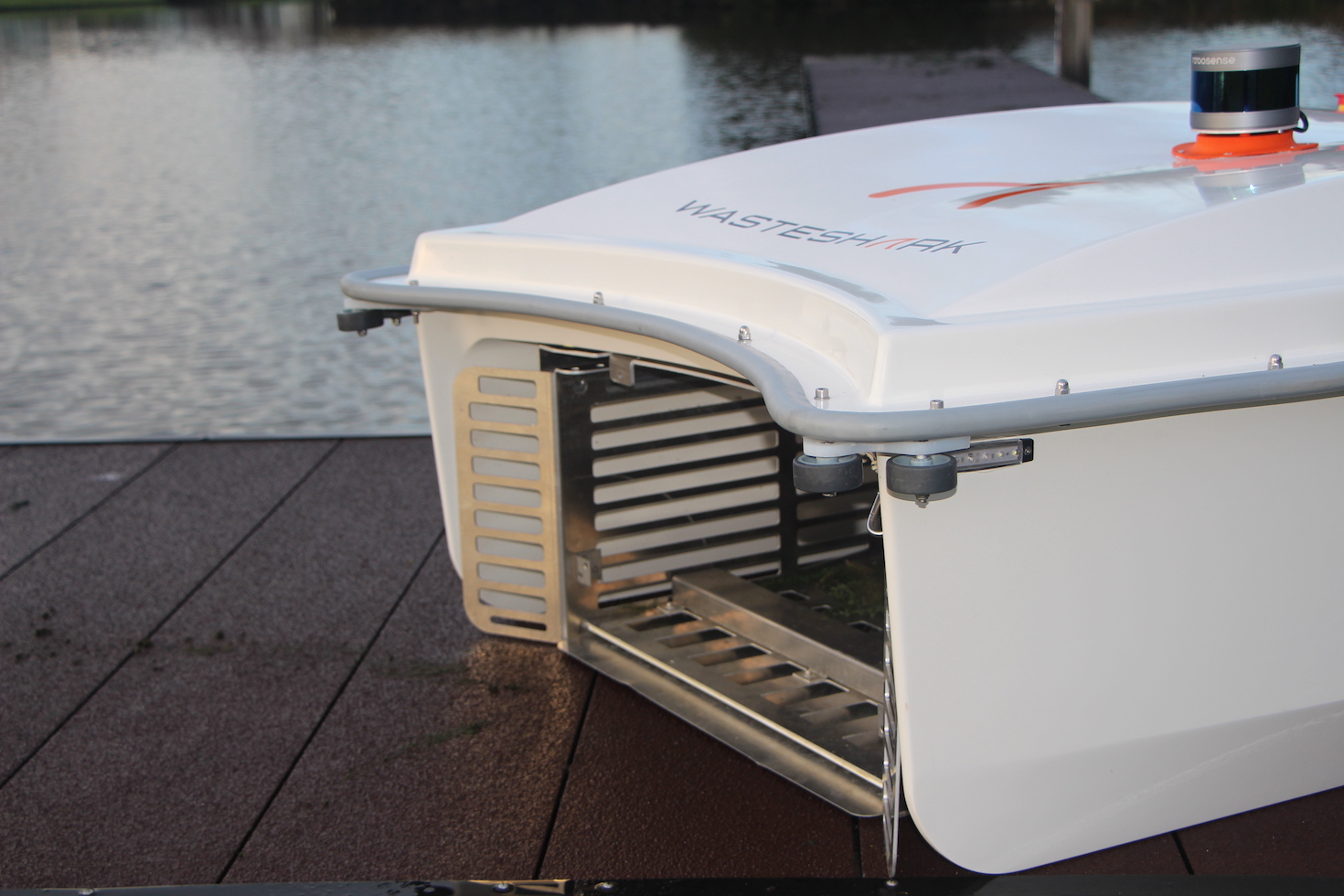
How much can the WasteShark gobble up? Each unit has a swim time of about seven to eight hours, collecting about a half ton of garbage in a single shift before the aquadrone needs to be recharged. During that time, it can cover about 7.45 miles, or a couple of football fields in area, according to Hardiman. The price tag starts about $23,600.
Once a WasteShark’s appetite is sated, it can be returned to a docking station, a SharkPod, where the waste is unloaded. From there, it’s collected and processed as part of the company or city’s traditional waste management systems, Hardiman said.

RanMarine, based in Rotterdam, is planning a big U.S. push in 2022, with a big focus on Florida and Gulf states facing thorny clean-up challenges — a prototype for a larger “oilshark” that could potentially be used for spills and leaks is in progress. It could find a following in places such as Nigeria, given the nation’s history of spill associated with oil production, Hardiman said. Also in the works is a docking system that could make the units more fully autonomous — right now, they run via remote controls.
The money for all that research and development is coming from several backers. RanMarine’s initial funding came through an accelerator for the port of Rotterdam. It also is operating with a grant from the European Union and took an early-stage, bridge fund investment of about $590,000 from European venture capital firm Boundary Holdings.
Given that close to 8 million metric tons of waste are flowing into the ocean annually, Hardiman is under no illusion that one startup can alone solve the ocean plastic issue. “Before the trash gets into the ocean, we have a customer… If you start collecting trash in the ocean, no one lays claim,” he said.
And by addressing waste and debris in the waterways that dump into the open sea, RanMarine’s team hopes to take a bite out of the problem. “Ultimately, robots play a part in going and getting the job done, as messy as it is, without complaining,” he said. “Let humans get on with the job of making the planet better.”