November 2026
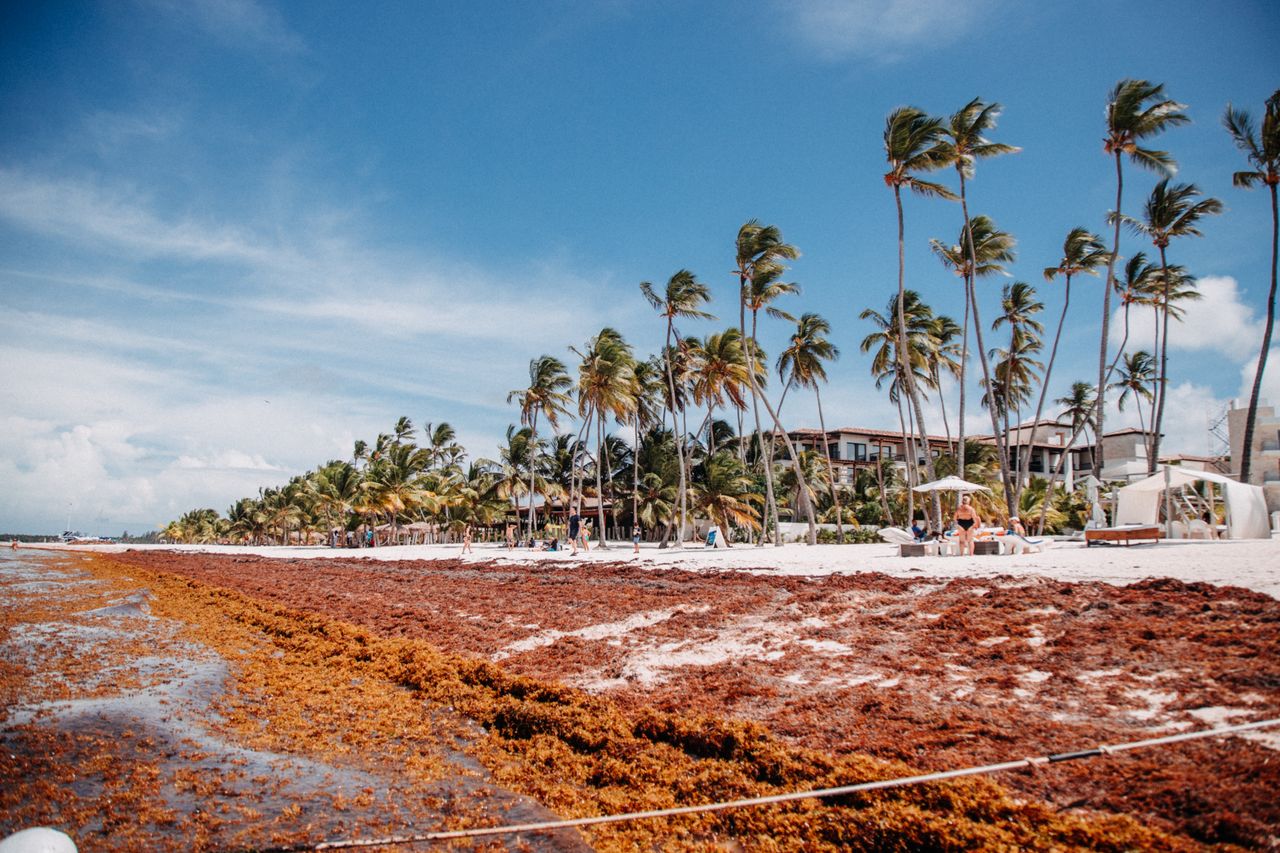
This year, sargassum broke every record again, proving why intercepting sargassum at sea has become essential for coastal communities. Scientists at the University of South Florida expected the 2026 bloom to exceed the record of 37.5 million tons set the year before, and by March more than 9 million tonnes were already drifting towards Florida and the Caribbean, as Popular Science reported at the time. Across the region, beaches disappeared under thick brown mats of seaweed. As we wrote in September in From Satellite Pixels to Sinking Profits, hotels cut prices and tourists stayed away.
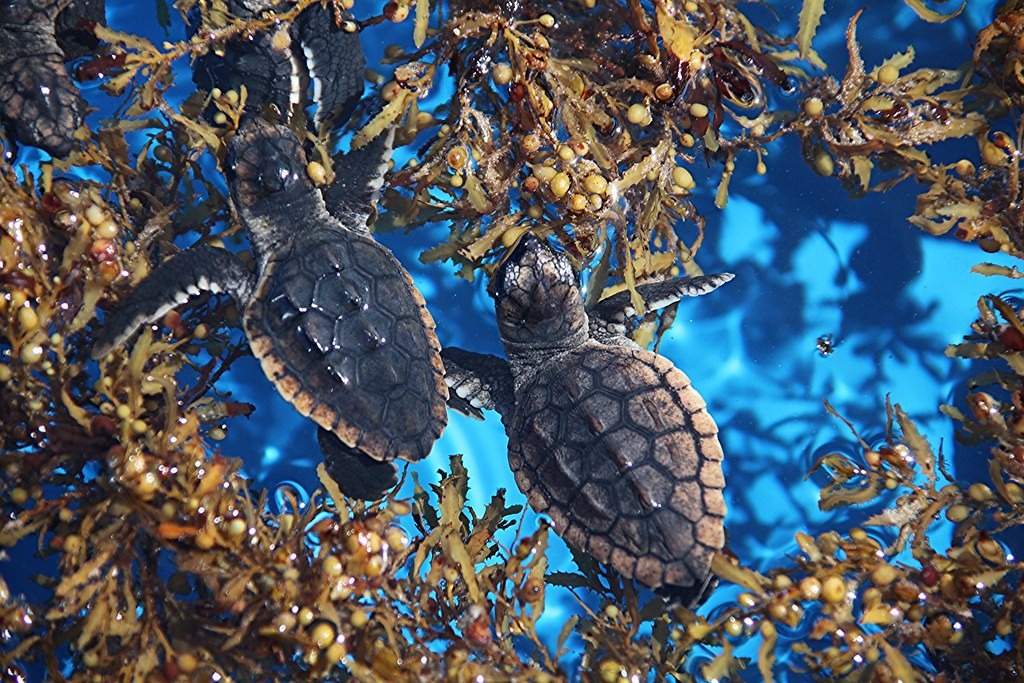
Yet sargassum itself is not the villain. Out in the open Atlantic, floating sargassum forms one of the ocean’s richest habitats, where young sea turtles shelter. The trouble starts when it ends up in the wrong place. Since 2011, likely fed by extra nutrients from rivers such as the Amazon, sargassum has spread far beyond its usual home, forming the Great Atlantic Sargassum Belt that now reaches from West Africa to the Caribbean, as the Energy Watch Group describes in its 2025 policy paper on ocean farming.
Did you know?
Out in the open Atlantic, sargassum is known as the “golden floating rainforest”, a name popularized by ocean explorer Sylvia Earle. The floating mats can stretch for miles, and they work as a nursery in the middle of the ocean. Crabs, shrimp and some 120 species of fish live in them. Young dolphin fish, jacks, mackerel, wahoo, tuna and billfish grow up there, and hatchling sea turtles swim out to the mats for food and shelter during their first years. One study counted larvae and juveniles of 122 fish species in sargassum, and a single clump the size of a football held around 900 tiny fish larvae.
It is also tied to one of the great mysteries of the sea. European and American eels are thought to spawn in the Sargasso Sea, after journeys of thousands of miles. Nobody has ever seen them do it, but in 2022 researchers tracked adult European eels to the edge of the presumed breeding area for the first time. Around ten species live nowhere else on Earth, many of them camouflaged in the same golden-brown colors and frond-like shapes as the seaweed, as coastal scientist Stephen Leatherman explains in The Conversation.
That is exactly why SargassumNL focuses on sargassum that drifts towards the coast, and not on the healthy mats out at sea.
For the people responsible for those coastlines, none of this came as a surprise. Hotel managers, municipalities and port operators have spent years clearing their shores, often every single morning of the season. They know the problem well. But they also know that clearing the beach only deals with the sargassum that has already arrived.
At RanMarine, we have been looking at that gap: the water between the open sea and the beach.
Why Clearing the Beach Is Not Enough: The Case for Intercepting Sargassum at Sea
Beach clean-ups remain necessary, and the teams doing them do essential work. But once sargassum lands, the clock starts ticking. According to the US Environmental Protection Agency, decomposing sargassum starts releasing hydrogen sulphide and ammonia within about 48 hours of beaching. These gases can cause headaches, nausea and breathing problems, especially for children, older people and people with asthma. In 2018, Martinique and Guadeloupe recorded more than 11,000 cases of acute exposure to hydrogen sulphide alone.
The seaweed also absorbs heavy metals, particularly arsenic. Samples taken on Mexican beaches have contained arsenic levels well above food-safety recommendations, which makes simply dumping or burying the seaweed a risk in itself. Meanwhile, in the water, dense mats block sunlight and decaying sargassum pulls oxygen out of the water, harming seagrass, sea turtle nesting beaches and the coastal ecosystems that tourism and fishing depend on.
The conclusion is simple. The earlier sargassum is collected, the less harm it does. And once it is collected, it should be put to good use rather than left to rot.
One chain, from satellite to product
That is the idea behind SargassumNL, which was officially launched in the Netherlands on 12 November. SargassumNL is a Dutch public-private partnership that brings together companies and knowledge institutes working on circular, science-based and scalable solutions for the sargassum influx in Mexico and the wider Caribbean. It is part of the Partners in International Business (PIB) programme of the Netherlands Enterprise Agency (RVO), and works in alignment with Mexican authorities. Its first focus is Quintana Roo, the Mexican state that is home to Cancún and the Riviera Maya.
The launch took place at Carlton Beach in Scheveningen, The Hague, and we were honoured that H.E. Alicia Buenrostro Massieu, Ambassador of Mexico to the Netherlands, attended. Her presence underlines what this partnership is about: Dutch knowledge and technology working side by side with Mexico on a challenge that affects its coasts, communities and economy.
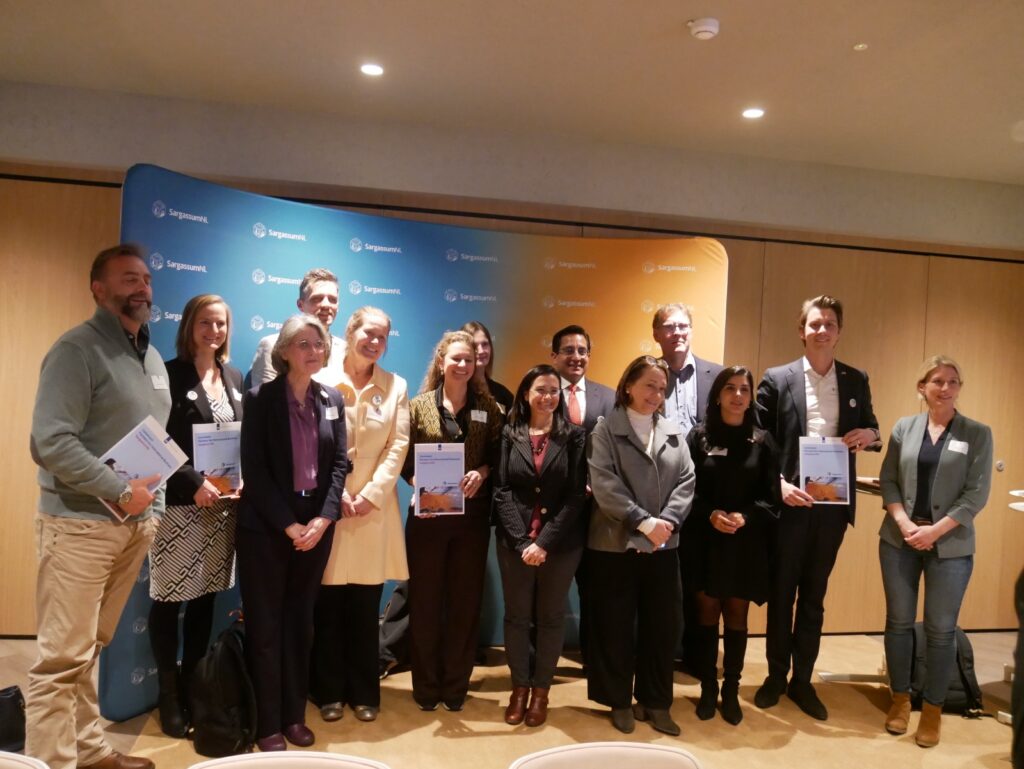
No single company can solve the sargassum problem on its own. SargassumNL covers the whole chain, with each partner bringing its own expertise:
- satellite detection and drift forecasting by Fugro and Marmoris
- offshore collection and marine operations by Damen
- autonomous nearshore collection by RanMarine
- biorefinery and digestion expertise from Sustainable Planet Solutions and GOA-Ventures
- biomaterials innovation by SeaWood Materials
- scientific validation and impact modelling by Wageningen University & Research, NIOZ and Marmoris
- project coordination, capacity building and drones by Cambisol
Satellites see the sargassum coming, vessels collect it at sea and near the coast, and processing partners turn it into biogas, fertilisers and bio-based materials. Research partners make sure it is done responsibly, with a collection that protects marine life and decisions based on science.
Collecting in the last mile
This is where our MegaShark provides the additional value to intercepting sargassum at sea. Large offshore vessels can collect huge volumes of sargassum in open water, but they cannot follow it into shallow bays, marinas, harbours and the calm nearshore waters where it tends to gather. Our autonomous vessels work in exactly those places.
Because our vessels also measure the water as they work, they bring something extra to the partnership. Coastal teams and partners can use them to:
- collect sargassum in harbours, marinas and bays before it reaches the beach and starts to rot
- map oxygen, temperature and turbidity in the areas where sargassum gathers
- provide on-the-water measurements that help validate what satellites detect from space
- help research partners understand how sargassum affects water quality along the coast
- compare conditions before and after collection, and over the season
The satellite does not replace the vessel on the water. It tells the vessel where to go.
From Cancún to the coast
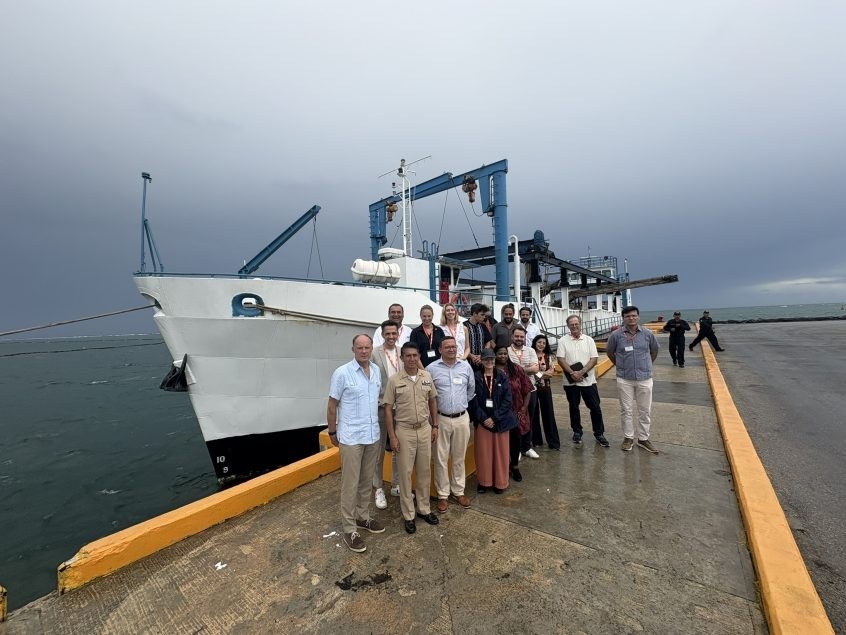
The work has already started. In early October, SargassumNL made its first trade mission to Mexico for the 4th EU–Caribbean Global Gateway Conference on Sargassum in Cancún, where governments, investors and companies met to move from pilot projects towards a sargassum value chain for the Caribbean. The conference brought together more than 480 participants from 45 countries, and RanMarine was part of the Dutch delegation. Together with the Dutch Embassy in Mexico, the partners were introduced to key Mexican stakeholders during the visit.
SargassumNL’s goal is to turn sargassum from an environmental and socio-economic burden into a circular resource that strengthens coastal resilience. In practice, that means moving away from reactive beach clean-ups towards an approach where sargassum is detected early, collected before it lands and processed into useful products such as biogas, fertilisers and bio-based materials.
That potential is real. According to the same Energy Watch Group paper, sargassum can double its biomass in about ten days, and dried sargassum is around 30% carbon, which makes it a valuable raw material rather than waste. We explored that idea further in Beyond Net Zero.
To get there, the partnership works towards four aims:
- delivering integrated, circular solutions for sargassum in Quintana Roo
- building a responsible new market for sargassum management and valorisation in Mexico and the wider Caribbean
- enabling long-term, sustainable management of the coast
- creating a shared knowledge base and platform with the latest research and practical experience from its partners, including lessons on nearshore removal with the WasteShark
SargassumNL runs as a three-year programme, starting in Mexico and growing step by step into the wider Caribbean.
If you would like to read more about sargassum, see our earlier articles From Satellite Pixels to Sinking Profits, on its impact on Caribbean tourism, and Beyond Net Zero, on how floating sargassum could help cool the planet. In Beyond the Sampling Point we explain how a WasteShark maps water quality while it moves.
A clean coast starts at sea
Sargassum is not going away. But with the right knowledge, the right technology and the right partners, it can become a resource instead of a crisis. We are proud to be part of a Dutch team that wants to prove exactly that, and we look forward to working with our partners and our Mexican colleagues to make it happen. A special thank you to Ambassador Buenrostro Massieu for joining us at the launch.
SargassumNL is a Dutch public-private consortium of eight companies and two knowledge institutes, backed by the Netherlands Enterprise Agency (RVO). They tackle the sargassum crisis in Mexico and the Caribbean by connecting the entire value chain—from satellite detection and offshore harvesting to processing seaweed into circular biomaterials and bioenergy.
Want to know more about SargassumNL or our role in it? Visit www.sargassum.nl or get in touch.