“In our pursuit of a cleaner, more sustainable future, battery-driven autonomous surface vessels (ASVs) are emerging as invaluable tools! They’re transforming water pollution clean-ups on a grand scale,”
Richard Hardiman, CEO of RanMarine.
Water pollution significantly threatens ecosystems, biodiversity and human health worldwide. From industrial or agricultural runoff to oil spills and plastic waste, pollutants contaminate water bodies, endangering aquatic life and compromising vital resources. Traditional clean-up methods often fall short due to limitations in workforce, resources and efficiency However, the rise of autonomous technology presents a game-changing opportunity to tackle this pressing and ever-growing issue.
Ports, Harbours And Marinas
All water bodies are impacted by pollution, but as busy centres of trade and travel, ports, harbours and marinas have become key locations that require attention to address their pollution concerns. Ports are hubs for global trade and are crucial for the world economy. Sadly, their operations often come at a significant cost to the environment, generating high pollution levels. Commercial and fishing harbours are notorious for leaking waste into surrounding seas. Plastic is a huge concern and requires regular removal to prevent its accumulation. Wind also poses a big challenge for harbours as it quickly and easily blows waste into the water.
RanMarine Has The Technology to Help
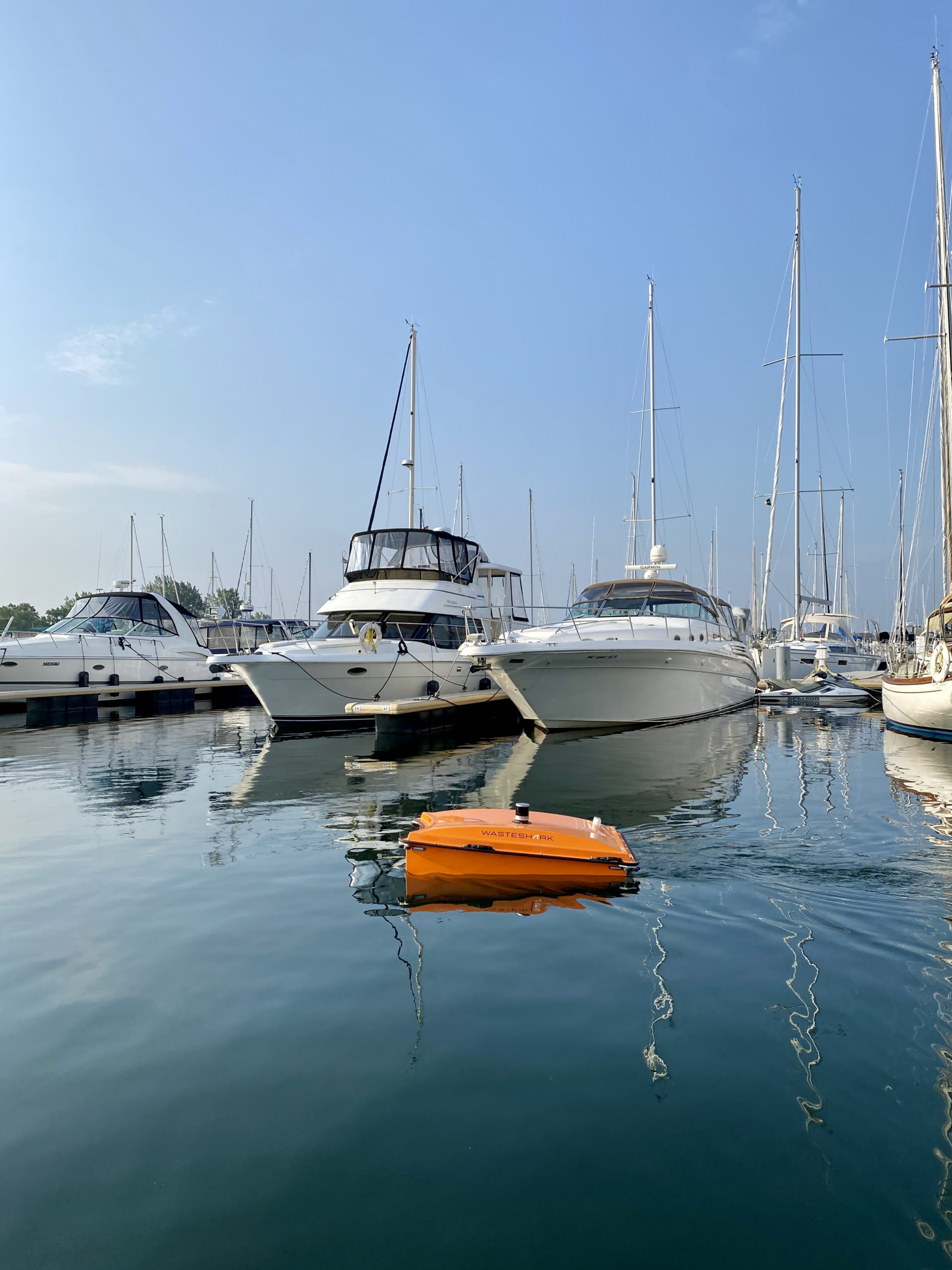
RanMarine Technology is a cleantech company that designs, manufactures and distributes emission-free ASVs such as the WasteShark, MegaShark, and soon-to-be-released OilShark. RanMarine’s Patrick Baransky was able to tell me more about what they do and how their technology is making a difference to pollution clean-up efforts. “We want to empower people and organisations to restore the aquatic environment back to its natural state. Our initiatives help to clear-up debris, plastic, algae and other biomass from water bodies. We combine this with water-quality data acquisition, with the overall aim of safeguarding aquatic ecosystems. RanMarine is perhaps best known for its robotic WasteShark. Inspired by the whale shark, which uses its broad mouth for filter feeding, this ASV houses a central waste collection basket between its hulls to scoop up floating rubbish. It is equipped with depth and temperature readings and an array of optional extra sensors for oxygen, pH and turbidity levels. The WasteShark was designed to reach areas that are tough to get to. It is small enough to fit into tight spaces yet big enough to make a difference!
The MegaShark is a scaled-up version of Waste Shark designed with a larger storage compartment to handle larger volumes of waste and biomass. Its size allows for extended operation periods without the need for frequent emptying. It is used in bigger water bodies and industrial areas where waste accumulation is more substantial, making it a perfect fit for ports, harbours, and marinas.
Excitingly, RanMarine is also in the advanced stages of research and development, with a goal of bringing the OilShark to fruition in 2024.
“Built on a platform similar to the MegaShark, this innovative vessel harnesses industry expertise to transform oil spill clean-up. Its optimal size allows for swift deployment and safe and sustainable resolution of oil spill challenges, particularly in harbours and ports due to engine or pump spillages.”
Digital Transformation: Providing Solutions to Big Issues
The modernisation of ports and harbours into digital hubs, often termed Port 4.0, has numerous benefits in addressing environmental concerns and advancing sustainability. Digital transformation also brings many other advantages: improved waste collection techniques, increased efficiency, accuracy, and safety. Digitalising port operations and introducing smart and clean energy operations minimises environmental impact, while IoT enables real-time data exchange and informed decision-making.
The WasteShark offers both remote-controlled operation and full robotic autonomy, minimising human intervention while performing waste collection and environmental monitoring tasks. This capability optimises operational efficiency, reduces costs and promotes cleaner port waters. Additionally, these agile vessels excel at navigating hard-to-reach areas in marinas, ports, or harbours, intercepting water pollution before it disperses into the open ocean.”
Using the RanMarine ASVs, ports and harbours can leverage customisable onboard sensors and cameras to gather data on waste accumulation patterns and water quality conditions. This data empowers port authorities to pinpoint pollution hotspots, prioritise clean-up efforts, and enact targeted interventions for maximum efficacy.
Scalability and adaptability are further benefits of this digital shift, as RanMarine’s ASVs can be integrated into existing port infrastructure. This flexibility allows for tailored responses to evolving waste management needs, ensuring continuous protection of marine ecosystems in a dynamic environment.
Where Will We Go From Here?
With global trade expected to continue growing, the environmental pressures associated with port activities are likely to intensify. Maritime users and boat owners are increasing, pushing up the number of marinas and people frequenting these facilities. Addressing these challenges will require concerted action from governments, industry stakeholders and individuals to develop and implement innovative solutions that balance the needs of maritime trade, recreation, and tourism with environmental sustainability. The pollution of ports, harbours and marinas represents a complex and pressing environmental issue with far-reaching consequences. As we navigate these waters, we must raise awareness and advocate for cleaner, more sustainable operations to protect the health of our planet and its inhabitants for generations to come.
Baransky was able to shed light on the situation further with some statistics:
The United Nations Environment Programme forecasts that plastic waste in aquatic ecosystems will almost triple, ranging from 8-15 billion kg annually in 2016 to an estimated 24-40 billion kg by 2040. Aggressive agricultural practices and nutrient runoff are fuelling an increase in Harmful Algal Blooms, adversely affecting marine ecology and economies. The National Academy of Sciences also reports approximately 4 million metric tons of oil entering global oceans annually from 2010 to 2019. The US Coast Guard estimates around 30,000 minor to moderate oil spills annually in the US, primarily from fuel bunkering and salvage operations, requiring legal protection and cleaning protocols in major ports and harbours.”
RanMarine is providing the technology to aid people in the digital transformation transition-harnessing the power of ASVs to keep our aquatic environments pollution-free. RanMarine’s technology already spans 27 countries, and they aim to achieve widespread global adoption within the next decade.
“Ultimately, our goal is for our Autonomous Surface Vessels to become as ubiquitous as robotic vacuum cleaners or street sweepers, Innovation, crafted for nature“
To share the LinkedIn Story ⤵️
https://www.linkedin.com/feed/update/urn:li:activity:7184203572740259840/
<Original story published by H2O Global
https://h2oglobalnews.com in their April 2024 edition. Written by Natasha Posnett>