These drones are swallowing tonnes of plastic waste before it reaches the ocean

By Shivan Sarna  with AP
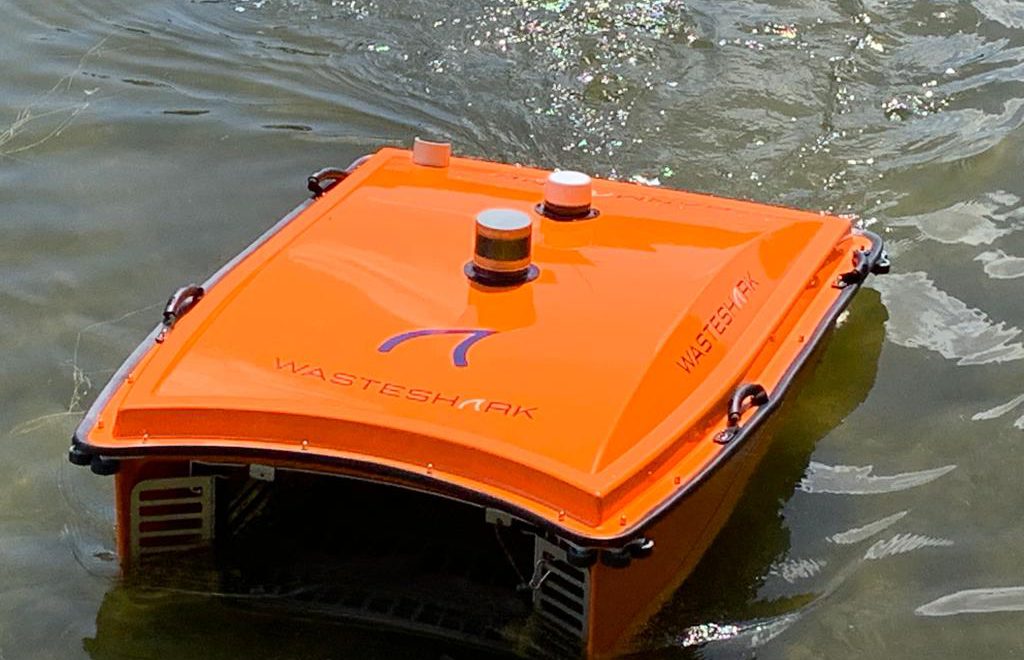
The WasteShark by RanMarine is designed to remove floating pollution such as plastics, algae and biomass from lakes, ponds, waterways and harbours. 

Millions of tonnes of plastic wind up in the ocean every year, killing plants and animals. That’s why companies around the world have developed novel devices to help reduce the ocean plastic problem.

Dutch company RanMarine has deployed several 157-centimetre wide aquatic drones called WasteSharks that capture rubbish and bring it back to land.

The drones can hold 160 litres of trash, floating plants and algae, according to RanMarine Technology.

The aquatic tech is inspired by the whale shark, which swims with its mouth wide open to capture prey.

“So, that’s why we have two pontoons, one on each side, so that the waste can come in from the front and it gets trapped in between the pontoons,” explains design engineer Tessa Despinic.

It’s crucial to scoop up the plastic before it reaches the large ocean expanse, says Nancy Wallace, director of the U.S. National Oceanic and Atmospheric Administration’s (NOAA) Marine Debris Program.

“Once plastic or trash ends up in the ocean, it’s very hard to collect because it does break down. And so it gets smaller and smaller and it’s just hard to get out to our big open oceans and collect the trash there.

What other trash devices have been developed around the world?

The system is also easy to maintain as each mesh fence is angled to guide trash to a riverbank excavators pile it into dump trucks.

In Chennai, eight traps in the Cooum River scooped up 2,200 tonnes of plastic and 19,800 tonnes of other trash and floating plants in 2018, according to the company.

Then there’s the Osprey Initiative of Mobile, Alabama in the US. The company sets up floating traps on creeks, canals and rivers in the southeast of the country and trains local crews to deal with the waste they catch.

These plastic-gobbling devices are an attempt to curb an estimated 8 million tonnes of plastic that enter the ocean every year.

“The most important thing with marine debris or plastic or trash in our ocean is we don’t want it there in the first place,” Wallace from the NOAA says.

“So while all of these devices are incredibly helpful, we really need to work on the upstream solutions of generating less waste from the consumer standpoint, but also the industry standpoint.”

Overall, Wallace adds, there are a lot of different players involved in solving the plastic waste problem.


more news

Explore how the EU’s May 2026 Digital Action Plan is transforming water management. Discover why real-time pollutant detection and autonomous IoT tech are the new standards for a Water-Smart Society.
Discover how the University of Toronto Trash Team combines autonomous technology with manual collection to research, quantify and combat plastic pollution in the Great Lakes.
Leadership realignment positions company for next phase of global growth and capital markets readiness
While conventional boats handle heavy-duty trash tasks, marine robotics offer compelling advantages for daily maintenance, environmental monitoring, and sustainability.
As a partner, RanMarine joins a dedicated community of over 50 ports and numerous maritime operators committed to measurable environmental improvement.

Ready to see our shark in action?

Get in touch for a live virtual demo or a quote.
Our team is ready to help.

Trusted by Port Authorities and Facilities Management Teams across the globe

Proven technology. Global Impact.

Don’t just take our word for it. Explore our case studies to see how our customers use data-driven autonomy to create cleaner, safer waters around the world.

Leeds Waterfront Group

Leeds’ waterways collect tons of floating debris annually, overwhelming manual clean-up crews and threatening wildlife habitats along the River Aire, Leeds and Liverpool Canals

Love Boat

Maintaining water quality in Italian harbours, marinas and inland waters to meet tourist standards whilst protecting the environment in a cost- and labour-efficient manner

Gemeente Zaanstad

The WasteShark collects floating litter and removes rapidly growing duckweed in urban canals, keeping Zaanstad an attractive city

Our Technology

Advanced robotics designed to clean, monitor, and restore marine environments.

WasteShark

Manual & Accessible

The essential tool for calm waters

WasteShark +

Built for Professionals

Power and speed for marinas & ports

WasteShark + Pro

Intelligent Autonomy

LiDAR guided cleaning with data capabilities

CyanoShark

Harmful Algae Solution

Specialized filtration to remove harmful blooms and biomass

MegaShark

Industrial Capacity

Heavy-duty waste removal for ports and large waterways

RanMarine Connect

Unified Data Platform

Real-time water quality monitoring and fleet management

Talk to Us

Tell us what you’re dealing with, we’ll help you find the right solution.

Cleaner waters, delivered to your inbox.

Join 2,000+ subscribers receiving the latest updates on marine technology and sustainability.

Schedule your demo

Book your 30-minute live demo with a RanMarine specialist.
(Subject to location and availability)

Submit a Support Ticket