Flocean in the Deep: The Dawn of Subsea Desalination

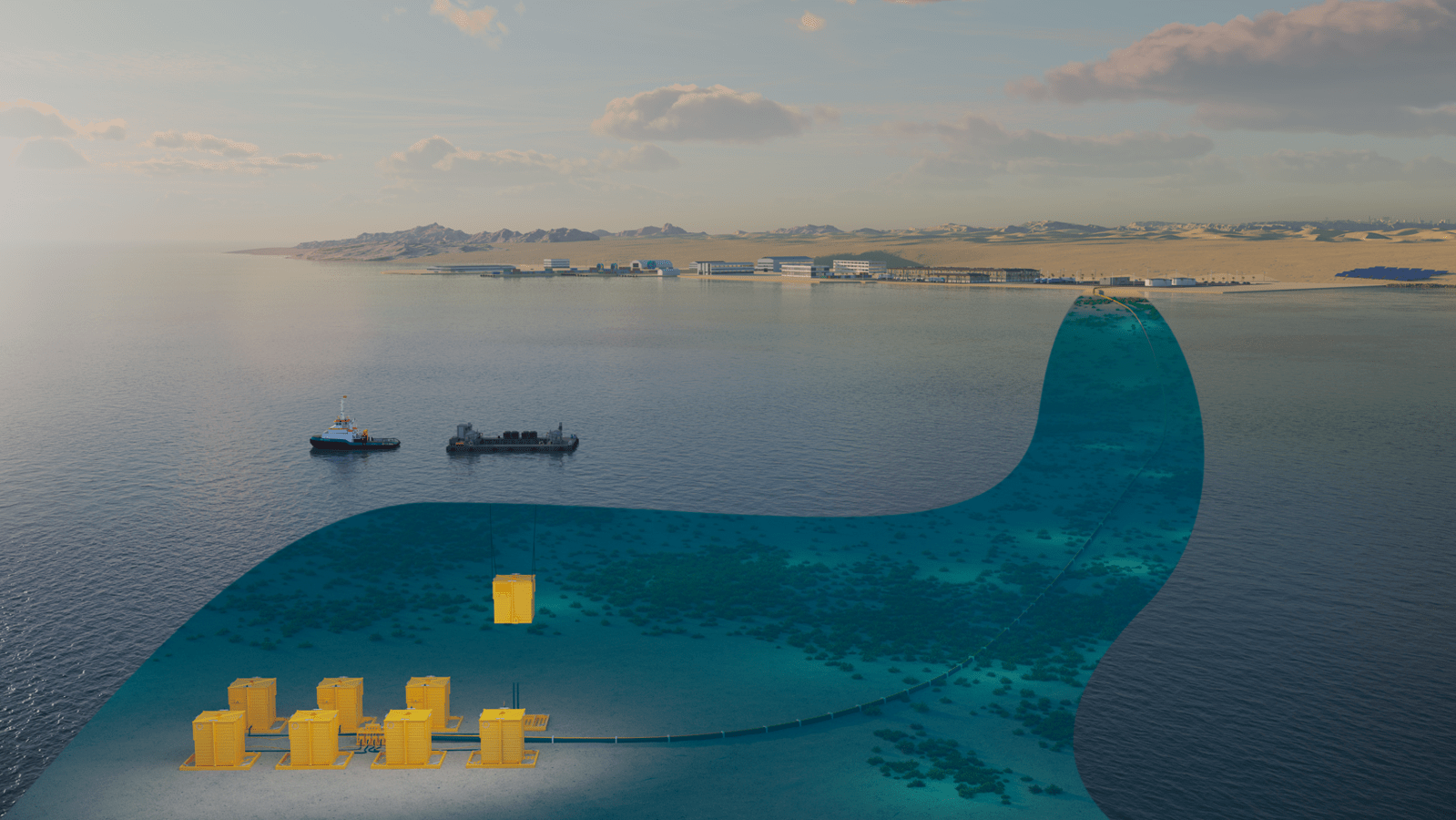
By placing their desalination units on the seafloor at depths of 400 to 600 meters, Flocean uses the ocean’s own weight to push seawater through reverse-osmosis membranes.

Subsea desalination plants linked to land

Thursday 12 March 2026

In January of this year, at the World Economic Forum in Davos, a relatively small Norwegian company called Flocean stood on the global stage as the winner of the Water Resilience Challenge. Their mission? To solve the world’s freshwater crisis by going where no one else thought to look: 500 meters below the surface.

With the official launch of Flocean One at Mongstad, Norway, we are witnessing the birth of a new era in ‘Blue Infrastructure.’ To understand why this is a revolutionary ‘feel-good’ story for 2026, one must first understand the problem with traditional desalination. Standard land-based plants are notorious for their massive carbon footprints, high energy costs, and the “brine problem” – the discharge of highly salty water back into the shallows, which can devastate local marine life.
flocean2

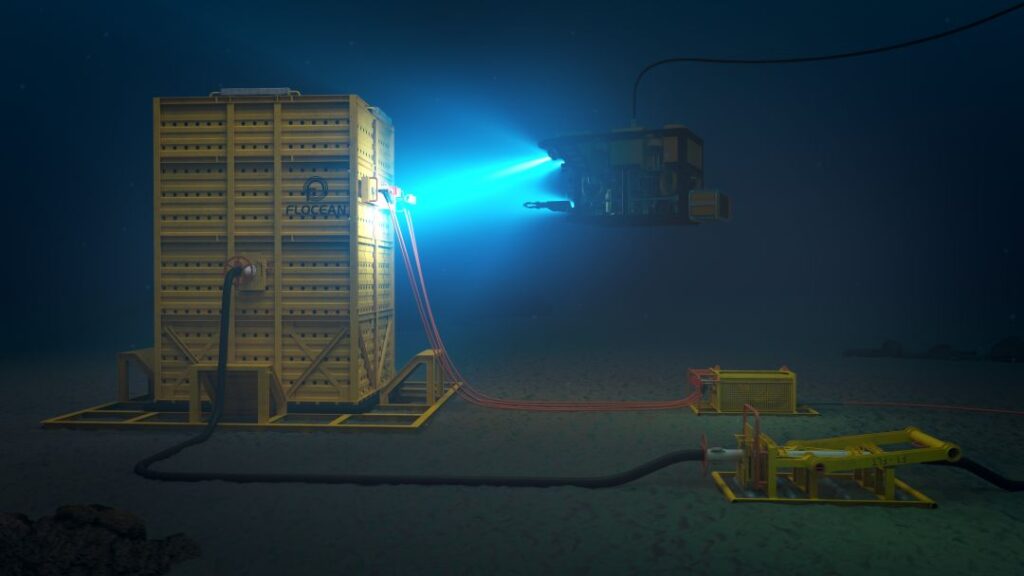
A desalination plant under the sea – image from Flocean

Working With Nature, Not Against It Flocean’s brilliance lies in a concept called hydrostatic pressure. In simple terms, the deeper you go in the ocean, the more the water wants to push inward. By placing their desalination units on the seafloor at depths of 400 to 600 meters, Flocean uses the ocean’s own weight to push seawater through reverse-osmosis membranes.

This eliminates the need for the massive, energy-hungry high-pressure pumps used on land. The result is a staggering 50% reduction in energy consumption. Furthermore, because the plant is submerged, it has a “zero-land footprint,” preserving precious coastal real estate for nature or community use.

A Holistic View of Water Health At RanMarine, our focus has always been on the health of the surface – the “skin” of our planet’s waterways. However, we recognise that the ocean is a single, interconnected system. Technology like Flocean’s subsea pods represents the same philosophy that drives our WasteShark: Automation, Efficiency, and Minimal Impact.

By moving industrial processes offshore and underwater, we reduce the visual and noise pollution in our coastal cities. Moreover, by dispersing the brine byproduct into the deep, moving currents of the ocean rather than the stagnant shallows of a bay, the environmental impact is dramatically neutralized.

As urban populations grow, the demand for both clean water and clean harbors will reach an all-time high. The “Blue Economy” of 2026 isn’t just about cleaning up the mess of the past; it’s about building the invisible, sustainable infrastructure of the future. Whether it’s removing plastic from a canal in Rotterdam or providing drinking water to a city in California, the solutions are increasingly autonomous, underwater, and undeniably green.


more news

The ‘Triple Threat’ Facing Modern Marinas

The visual of a pristine marina is the most valuable asset any dock manager possesses. Yet, beneath the surface, and increasingly on top of it, a silent crisis is unfolding.

The Tiny Guardians: How Microplastics are Breaking the Natural Cycle of Our Water

New research from the University of California San Diego has uncovered a hidden mechanism that is turning our lakes and coastal waters green.

A “Constitution” for the High Seas

A Historic Milestone: The Treaty Officially Becomes Law

The “Eye in the Sky” for Ocean Waste

Beyond the Horizon: Why 2026 is the Year We Finally “See” Plastic from Space

Flocean in the Deep: The Dawn of Subsea Desalination

By placing their desalination units on the seafloor at depths of 400 to 600 meters, Flocean uses the ocean’s own weight to push seawater through reverse-osmosis membranes.

Ready to see our shark in action?

Get in touch for a live virtual demo or a quote.
Our team is ready to help.

Trusted by Port Authorities and Facilities Management Teams across the globe

Proven technology. Global Impact.

Don’t just take our word for it. Explore our case studies to see how our customers use data-driven autonomy to create cleaner, safer waters around the world.

Gemeente Zaanstad

The WasteShark collects floating litter and removes rapidly growing duckweed in urban canals, keeping Zaanstad an attractive city

Challenge Almere-Amsterdam

Restore swim-safe water quality with CyanoShark’s chemical-free Cyanobacteria / Blue-Green Algae treatment.

Leeds Waterfront Group

Leeds’ waterways collect tons of floating debris annually, overwhelming manual clean-up crews and threatening wildlife habitats along the River Aire, Leeds and Liverpool Canals

Our Technology

Advanced robotics designed to clean, monitor, and restore marine environments.

WasteShark

Manual & Accessible

The essential tool for calm waters

WasteShark +

Built for Professionals

Power and speed for marinas & ports

WasteShark + Pro

Intelligent Autonomy

LiDAR guided cleaning with data capabilities

CyanoShark

Harmful Algae Solution

Specialized filtration to remove harmful blooms and biomass

MegaShark

Industrial Capacity

Heavy-duty waste removal for ports and large waterways

RanMarine Connect

Unified Data Platform

Real-time water quality monitoring and fleet management

Talk to Us

Tell us what you’re dealing with, we’ll help you find the right solution.

Cleaner waters, delivered to your inbox.

Join 2,000+ subscribers receiving the latest updates on marine technology and sustainability.

Schedule your demo

Book your 30-minute live demo with a RanMarine specialist.
(Subject to location and availability)

Submit a Support Ticket