By Richard Hardiman, Founder & President
Hello everyone,
Ten years on, it still amazes me to say this: RanMarine began in my garage in Cape Town. At the time, it was just me and a stubborn idea—a belief that robotics could help keep our waterways clean.
The major turning point was joining the PortXL Maritime accelerator in Rotterdam. Being in the heart of one of the world’s great ports opened doors I could never have opened alone: mentors, customers, partners, and a network that pushed us to think bigger and build better. Rotterdam has been our home ever since.
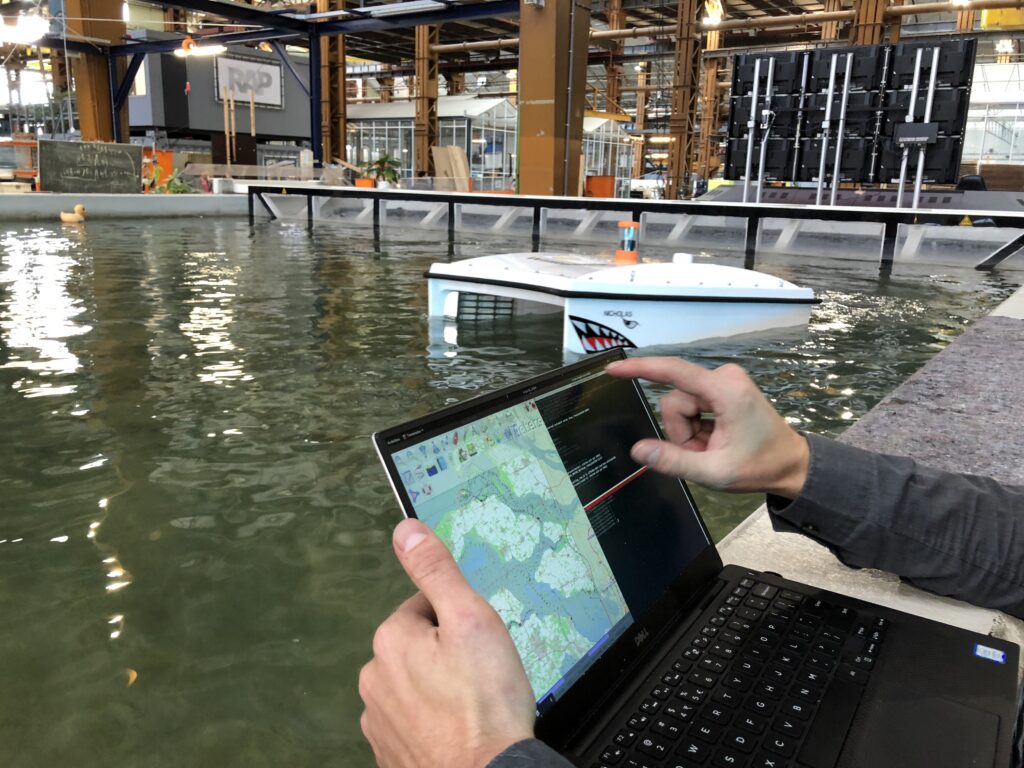
From First Prototype to Global Impact
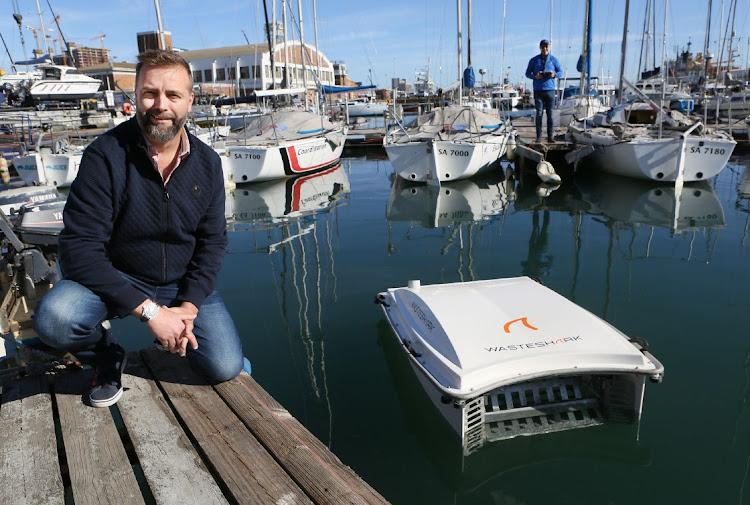
In 2016, our first prototype took to the Dutch canals, and in 2017, the first WasteShark went into commercial service. Modelled on the whale shark, it quietly filters plastic and debris from the surface without emissions, while collecting water quality data as it goes. A single unit can lift up to 500 kg of waste a day.
Growth came quickly:
- 2019: Expansion into the UAE and UK
- 2020: Launching in the US, South Africa, and Australia
- 2023: Expansion into South America
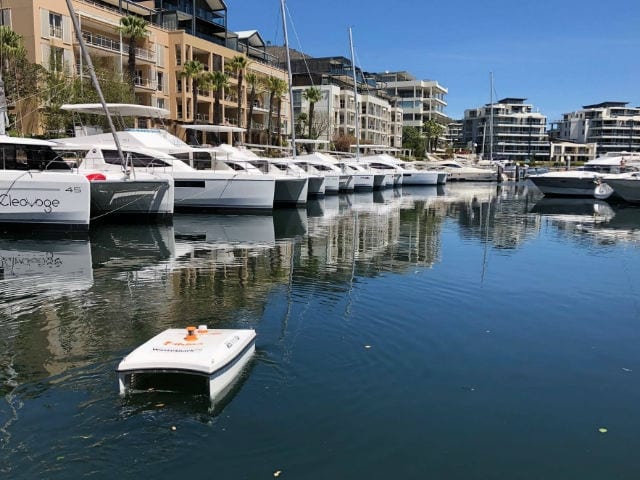
Today, we develop and deploy our products across 37 territories—including the Netherlands, the UK, many EU territories, the Middle East, the Americas, Canada and the United States, Southern Africa, Australia, and into Asia. Every new harbour, canal, lake, pond, and river brings different conditions and challenges, and each one has made our technology sharper and more resilient. More than 120 WasteSharks are now at work, patrolling over 40,000 km of waterways a year and collecting more than 6 million litres of waste since we began.
Listening to the Water (and Our Customers)
What excites me most right now is where our customers are taking us. Cleaning the surface is only half the story; they also want to understand what is in the water.
So, we are going deeper into water quality monitoring. Sensors on our WasteShark+ Pro measure parameters like pH, Nitrates, Oxygen levels, temperature, and depth, feeding real-time data through RanMarine Connect to help customers meet regulatory requirements and make better operational decisions. We build what our customers need, and it is making our products smarter every year.
That same customer-driven thinking led us to address cyanobacteria. Blue-green algae blooms are a growing threat to swimming water, wildlife, and coastal communities. Working with our partners at Eget Liber, we built CyanoShark, which treats blooms without chemicals using UV light, sonication, and ozone across three stages. In lab testing, it cut active chlorophyll by more than 96% in a single day, and in a real-life test at the Challenge Almere-Amsterdam triathlon, it helped keep the water swim-safe for the European Championship.
Built on Teamwork and Network
None of this would have happened without our team. They have stuck with us through long days, setbacks, and breakthroughs, directly shaping the way we build. Many of our best ideas have come directly from their curiosity and what they observe out on the water.
The same is true of the broader network we have built across sustainability and robotics: the engineers, researchers, port authorities, partners, and fellow founders who share our conviction that technology can restore the environments we depend on. Their introductions, advice, and encouragement have carried us further than they know.
Recognition has followed—including a CES Innovation Award in 2022—but the direct impact is what keeps us going. Every piece of plastic pulled from the water is proof that the original idea from that garage was worth chasing.
The Next Chapter: A Swiss Army Knife for the Water
Looking ahead, our attention is turning toward turning our autonomous robotic vessels into a true “Swiss army knife” for water management.
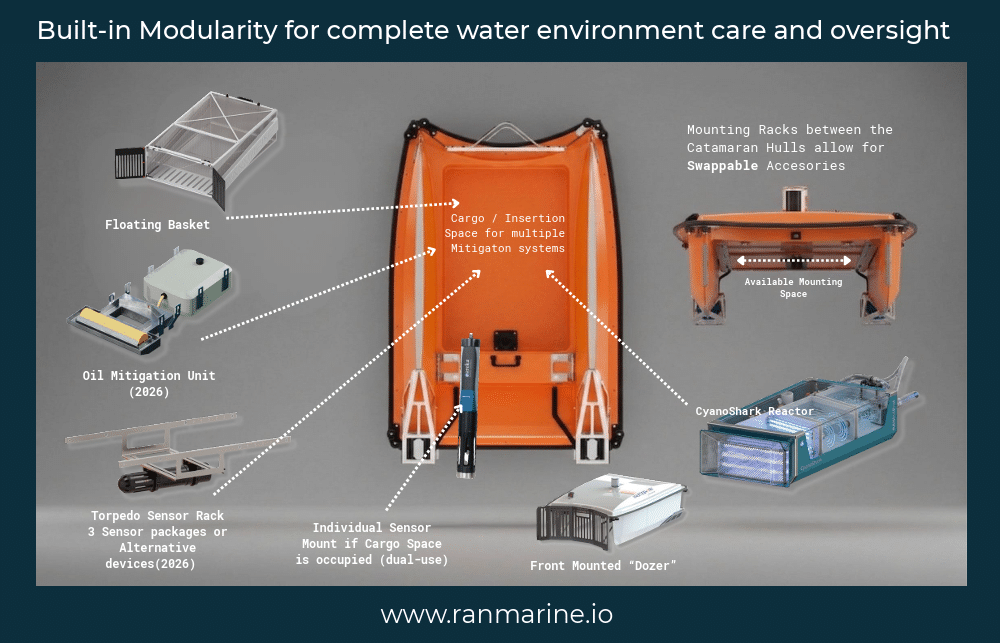
Our customers face a complex list of problems: oil spills and sheens, silt and mud build-up in ports and marinas, and the critical need to know exactly what lies beneath the surface. Rather than building a different vessel for every job, we are engineering one robust ASV platform with swappable payloads:
- Oil Remediation
- Bathymetric Surveying (mapping silt and sediment)
- Advanced Water Quality Sensors & In-Situ Sampling
- CyanoShark Algae Treatment
Change the payload, and a vessel that surveyed a marina basin in the morning can be cleaning up an oil sheen in the afternoon. For our customers, that means one unified platform that works harder, does more, and grows alongside their operational needs.
The journey is far from over, and I am excited for what comes next. Thank you for being part of it.
Warm regards,
Richard
Posted Sept 2026
Header image of Richard in Cape Town courtesy of the Sunday Times