Drones will clear our ocean trash

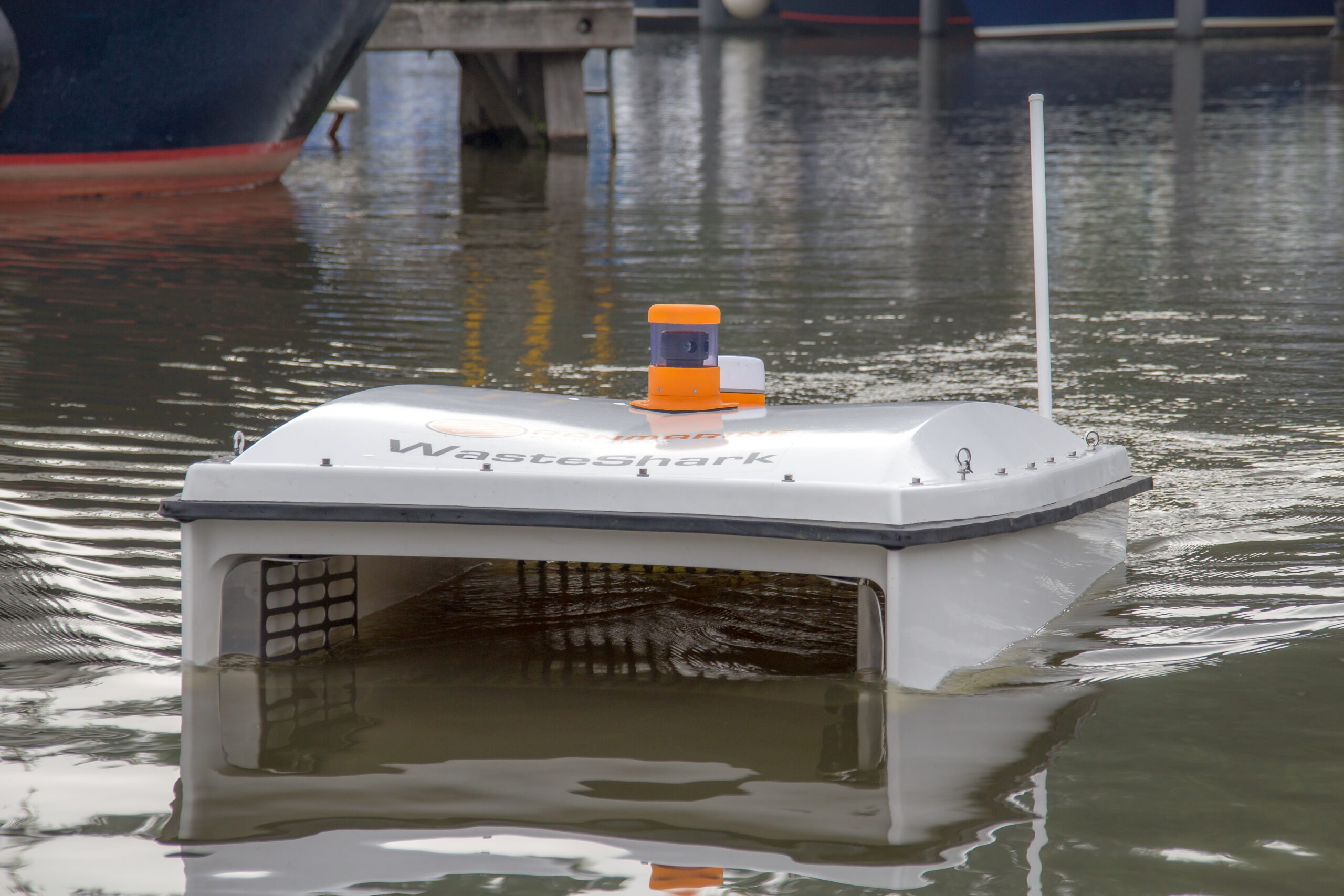
WasteShark

In 2014 Planet Earth produced 311 million tons of new plastic. 32% of it leaked into fragile ecosystems. 10-20 million tons reached the ocean, causing US$13 billion of environmental damage. California, Oregon and Washington alone spend $500 million annually clearing trash from their Pacific coastline.

WATER AND AIR, THE TWO ESSENTIAL

FLUIDS ON WHICH ALL LIFE DEPENDS,

HAVE BECOME GLOBAL GARBAGE CANS.

Jacques-Yves Cousteau

In some places, plastic microbeads outnumber plankton (a critical source of our oceanic food chain) by 26:1. The new generation of “biodegradable” plastics won’t solve this problem, because the conditions required for this to happen just do not exist in the ocean.

THE SEA, THOUGH CHANGED IN A

SINISTER WAY, WILL CONTINUE TO EXIST:

THE THREAT IS RATHER TO LIFE ITSELF.

Rachel Carson

The bitter commercial reality is that once trash reaches the open ocean it’s everybody’s problem… and nobody’s accountability. We need to stop trash reaching the ocean in the first place. But how?

The systemic, sustainable answer is four-dimensional.

We need to change human behavior, especially the pattern of “consume and dispose”.

We need to become more efficient producers; not “producing more, quicker”, but using better input materials for production, materials that can be completely recycled or perfectly decomposed at zero harm to the ecosystem.

We need to extract the trash that is already in the deep ocean.

We need to catch trash that is close to land before it is carried out to ocean by tide, current and wind.

Points 1-3 above are long-term change projects. Point 4 is a quick win; an opportunity to make instant improvement. Autonomous drones offer a low-cost, high-effectiveness approach to catching marine litter. A drone can operate 24/7 (trash does not keep regular working hours) in hostile conditions, and can do work that living beings cannot, or should not be compelled to, do. When your drone is also a learning machine, then a team of drones becomes a responsive, self-organizing swarm – an autonomous net to patrol your inland waters and catch waste before it harms the ocean ecosystem.

WE KNOW THAT WHEN WE PROTECT OUR

OCEANS, WE’RE PROTECTING OUR

FUTURE.

Bill Clinton

This is the future: autonomous drones clearing marine litter, while humans – and all species – just live, thrive and have fun! Technology at work, serving the sea.

OLIVER CUNNINGHAM is a sci-fi geek and futurist. He makes drones that swim around cities, eating marine plastic and keeping our seas beautiful.

Sources: Ellen MacArthur Foundation at the 2016 World Economic Forum; the United Nations; The Guardian; The Telegraph; www.plasticoceans.org


more news

The Data Vacuum: Why the EU is Calling for a Digital Revolution for Water

Explore how the EU’s May 2026 Digital Action Plan is transforming water management. Discover why real-time pollutant detection and autonomous IoT tech are the new standards for a Water-Smart Society.

From Observation to Action: The Evolution of Plastic Research

Discover how the University of Toronto Trash Team combines autonomous technology with manual collection to research, quantify and combat plastic pollution in the Great Lakes.

RanMarine Technology Appoints Michael Foss as CEO, as Founder Richard Hardiman Becomes President to Lead Product and Innovation 

Leadership realignment positions company for next phase of global growth and capital markets readiness

WasteShark vs Traditional Skimmer Boats: Which Solution Is Best for Modern Waterway Clean-up?

While conventional boats handle heavy-duty trash tasks, marine robotics offer compelling advantages for daily maintenance, environmental monitoring, and sustainability.

RanMarine Joins Green Marine: A Strategic Partnership for Cleaner, Smarter Ports

As a partner, RanMarine joins a dedicated community of over 50 ports and numerous maritime operators committed to measurable environmental improvement.

Ready to see our shark in action?

Get in touch for a live virtual demo or a quote.
Our team is ready to help.

Trusted by Port Authorities and Facilities Management Teams across the globe

Proven technology. Global Impact.

Don’t just take our word for it. Explore our case studies to see how our customers use data-driven autonomy to create cleaner, safer waters around the world.

Love Boat

Maintaining water quality in Italian harbours, marinas and inland waters to meet tourist standards whilst protecting the environment in a cost- and labour-efficient manner

BIC Consolidated

Maintaining pristine water quality across vast, debris-prone commercial waterfronts using traditional methods was labour-intensive, inefficient and lacked audit data

Challenge Almere-Amsterdam

Restore swim-safe water quality with CyanoShark’s chemical-free Cyanobacteria / Blue-Green Algae treatment.

Our Technology

Advanced robotics designed to clean, monitor, and restore marine environments.

WasteShark

Manual & Accessible

The essential tool for calm waters

WasteShark +

Built for Professionals

Power and speed for marinas & ports

WasteShark + Pro

Intelligent Autonomy

LiDAR guided cleaning with data capabilities

CyanoShark

Harmful Algae Solution

Specialized filtration to remove harmful blooms and biomass

MegaShark

Industrial Capacity

Heavy-duty waste removal for ports and large waterways

RanMarine Connect

Unified Data Platform

Real-time water quality monitoring and fleet management

Talk to Us

Tell us what you’re dealing with, we’ll help you find the right solution.

Cleaner waters, delivered to your inbox.

Join 2,000+ subscribers receiving the latest updates on marine technology and sustainability.

Schedule your demo

Book your 30-minute live demo with a RanMarine specialist.
(Subject to location and availability)

Submit a Support Ticket