Article by Smiley News
Did you know seaweed plays a crucial role in marine ecosystems?
It’s one of the world’s great unsung heroes, helping to mitigate the effects of climate change. The UK, with over 650 species of seaweed, is home to a diverse range of species.
That’s why, from 23-31 July, the Marine Conservation Society and the Natural History Museum will be asking people across the UK to head to the coast and spot seaweed as part of community science project: Big Seaweed Search Week.
The campaign asks beachgoers to search for, and record, 14 of the most common seaweed species. This information helps the organisations to map the distribution of specific species and collect long-term data that enables them to determine, as a result of seaweeds found, the impact of environmental changes in the ocean.
[Sign up here to receive a weekly dose of positive news in your inbox]
Amy Pilsbury, Citizen Science Lead at the Marine Conservation Society, said: “Studying seaweeds can tell us a lot about wider ocean and environmental conditions and the information supports real scientific research.
“Seaweed is a real ocean superstar, helping to buffer the effects of climate change, absorbing and storing carbon and protecting our coasts from waves and storm damage. The more data we gather with our Big Seaweed Searchers, the more knowledge and influence we have to protect our ocean, and seaweeds, for the future.”
So, why is seaweed so vital?
As well as providing habitats for other species, seaweed plays a major part in marine food chains and are a rich source of nutrients for animals such as crabs and sea urchins.
Seaweed plays a critical role in combating the climate crisis. These fast-growing algae produce oxygen – more than land plants – with phytoplankton (like seaweed) providing at least half of the oxygen we breathe. Seaweed absorbs carbon more effectively than trees, storing an estimated 175 million tonnes each year – equal to 10% of the world’s car emissions.
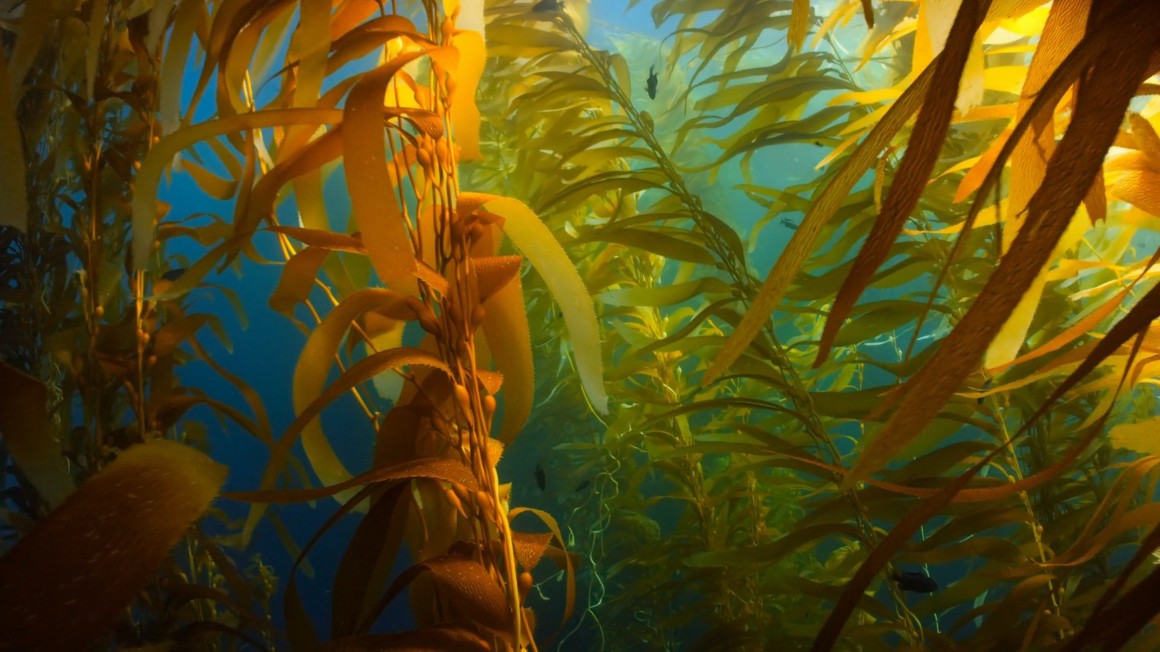
However, populations of kelp – large brown seaweeds that are a vital ‘blue carbon’ store – are reported to be declining around the world, limiting ocean ecosystems’ abilities to absorb carbon and combat the climate crisis.
Data gathered by volunteers at the Big Seaweed Search helps build a picture of what our shores are like, how they’re changing and informs scientists and decision-makers how best to protect them.
It’s easy to get involved in Big Seaweed Search Week, and anyone can take part. Training videos and downloadable resources are available, including a guide which helps beachgoers to identify the seaweed species they’re likely to spot and explains what they need to do.
Inspired to act?
GET INVOLVED: To get involved simply, register to take part and download your guide and recording form at bigseaweedsearch.org.
You then need to choose your 5 metres of coastline to survey, fill in your survey form, take LOTS of clear, close-up photographs for your survey to be accepted – and submit it through bigseaweedsearch.org.
SUPPORT: You can visit the Marine Conservation Society to find out about volunteering opportunities.