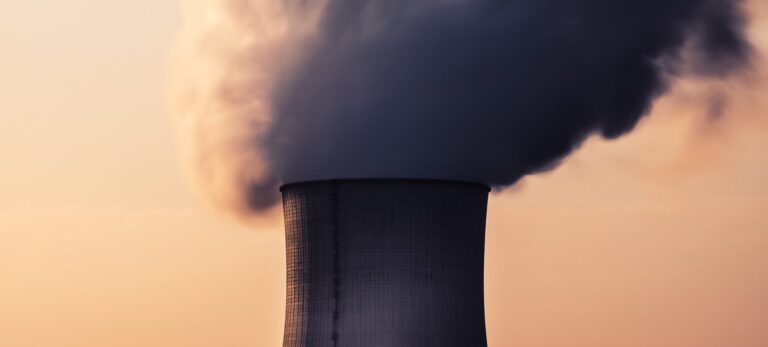
Our destructive habits have left an indelible mark on our planet, and finally, we are starting to pay the price. The recent natural disasters around the world, including the high temperatures, floods and wildfires are just some examples of what effect climate change is presenting.
Since 1970, CO2 emissions have increased by approximately 90%. With the Covid recovery now in full swing, energy-related carbon dioxide emissions are projected to increase by 1.5 billion tons this year, the second-largest increase in history, according to a new report from the International Energy Agency.
Consequently, there has been a major shift of focus towards the rehabilitation and preservation of blue carbon ecosystems to appropriate them as carbon dioxide sinks.
Unfortunately, due to rising sea temperatures, overfishing, and pollution, coastal systems are being utterly destroyed thus ultimately limiting the extent of their ability to absorb CO2.
Take mangrove forests, for example.
They are some of the most carbon-rich forests on earth, richer even than terrestrial forests. Not only do they protect coasts from erosion and damage caused by storms while maintaining water quality, but they also fix, release, and sequester more carbon by area than all other coastal habitats. It is no wonder then that conservationists and scientists are doing so much to preserve these natural habitats.
Mangrove deforestation and deterioration has been on the increase, due mainly to aquaculture, overfishing, and the effects of pollution. Add to that rising sea temperature and more violent storms and you understand how their root systems become weakened, causing them to destabilize and literally wash away. The destruction of these mangroves has a significant impact on our planet.
Over the last 50 years, mangrove forests have declined by 30-50% and these stressors are causing mangroves to release carbon, rather than sequester it, which is obviously a huge problem.
According to beachpedia, mangrove ecosystems are estimated to sequester and store about 3,767 tons of CO2 equivalent per hectare of mangrove habitat. Mangrove deforestation, on the other hand, accounts for 10% of all CO2 released from global deforestation, even though they only account for 0.7% of global tropical forest area. Let that sink in.
Mangrove trees, which have an odd appearance and look as if they are standing on stilts, can be found along ocean coastlines throughout the tropics. There are reportedly approximately 80 different species of mangrove trees and the forests only grow at tropical and subtropical latitudes near the equator. According to the World Resource Institute, the world lost 192,000 hectares (474,000 acres) of mangroves from 2001 to 2012, a total loss of 1.38% since 2000 (or 0.13% annually).
Coastal areas are protected from storm surge, erosion and dreaded tsunamis by mangrove swamps. Conservation programs often adopt projects aimed at protecting mangrove ecosystems due to their uniqueness and the protection against erosion they provide.
What is destroying mangrove forests?
Apart from the obvious (rising sea temperatures, pollution, and storms), you may be surprised to learn that the United Nations Environment Programme estimated that shrimp farming caused approximately a quarter of the destruction of mangrove forests.
According to WWF, shrimp is the most valuable traded marine product in the world.
Today farmed shrimp (also known as shrimp aquaculture) is a $12 – $15 billion industry. Shrimp production has one of the highest growth rates in aquaculture, at an approximate rate of 10% annually. Farmed shrimp accounts for 55% of the shrimp produced globally. In an effort to save shrimp farmers the exorbitant expense of having to erect high elevation water pumps for their farming operations, governments and development aid agencies have been promoting shrimp aquaculture near tidal areas as a path to alleviate poverty. This has unfortunately been promoted at the expense of wetland ecosystems, proving once again that human survival often comes at the expense of the ecosystems that we actually depend on for our survival as a species. A case of short-term gains over long-term sustainability. Or to put it differently, humans shooting themselves in the foot once again.
In terms of mangrove loss, Asia is guilty of the largest destruction with almost double the global average, despite this region boasting the world’s largest mangrove area.
Zero mangrove loss
According to the World Resources Institute, The Sundarbans (10,000 square km, about three-fifths of which is in Bangladesh) is home to the world’s largest area of mangrove forest, spanning approximately one million hectares. The forest is a famous biodiversity hotspot, home to 35 reptiles, 42 mammals, and 270 species of birds. The forest also protects threatened and endangered species like the Indian python, Bengal tiger, and the estuarine crocodile. It is interesting to note that it’s the only area known to have tigers that are ecologically adapted to mangrove habitats.
The Sundarbans is teeming with dozens of reptile and amphibian species. Crocodiles, Indian pythons, cobras, and marine turtles can be found in abundance in this biosphere. Established in 1984, Sundarbans National Park was designated as a UNESCO World Heritage site in 1987 as well as a biosphere reserve.
How do we protect our mangrove forests?
It’s easy to feel somewhat helpless and stressed after reading this blog. However, there are things you can do to help reverse the destruction of these important forests.
An organization doing amazing work around mangrove forest preservation is The Global Mangrove Alliance – a new collaboration between Conservation International (CI) and its partners.
In terms of supporting the preservation of mangrove forests, The Global Mangrove Alliance recommends that you firstly look for sustainable alternatives to eating farmed shrimp from mangrove areas. Secondly, they suggest finding governmental and local conservation organizations in your area that are focused on conserving mangrove forests and try to support them in any way you can. Conservation of mangrove ecosystems includes education, policy, science, and many other things.
We can either sit back and say it’s someone else’s problem, or we can do something by supporting the dedicated organizations that are actually saving these important habitats. After all, saving mangrove forests ultimately means saving ourselves.
Will you support a mangrove forest preservation organization today?