Toronto (February 26, 2024) – PortsToronto and the University of Toronto Trash Team are
proud today to release the official results of the 2023 Trash Trapping Program’s research
season. From May through October 2023, PortsToronto’s network of trash traps, which includes
eight Seabins and two WasteSharks, removed 43kg of litter, including 62,996 pieces of small
plastic pollution from the Toronto Harbour. This includes items such as plastic pellets, pieces of
foam from food containers, plastic bottle caps, cigarette butts and fatbergs (*see description
below).
2023 Results and Findings
Tiny debris, including microplastics (items smaller than five-millimetres) remain by far the most
common items by count collected by Seabins. Plastic items in the environment eventually break down into microplastics (often irregularly shaped small fragments), which can make it difficult to determine their origins. This year, using the same methodology, the research team has begun to see signs of a decrease in the amount of microplastics collected in PortsToronto Seabins, which could suggest the benefits of additional outreach and education efforts toward waste reduction.
WasteSharks, which are equipped with a large catch basin, captured mostly large plastic
fragments – including large pieces of foam from construction and food containers, hard plastic
fragments, as well as plastic water bottles, caps, cups, lids and straws. Data also revealed that
fatbergs were within the top ten most commonly found items in both the Seabins and the
WasteSharks. *These rock-like masses are formed by the combination of fat, grease and
wastewater materials, including wet wipes and diapers, that are released with wastewater
redirected to the lake during heavy rainfall.
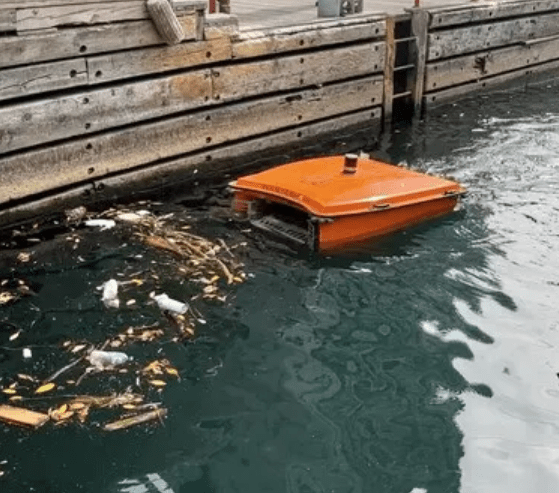
In August 2023, PortsToronto launched a pilot program with two RanMarine Technology-supplied WasteShark aquadrones. This pilot program represented a Canadian first for these innovative trash traps, which are remotely operated and skim the surface of the water to collect floating debris. Over the course of only three expeditions in October 2023, the Toronto WasteSharks “Ebb and Flow” collected 19.2 kilograms of floating trash, including nearly 600 pieces of microplastics. With a larger capacity and remote controlled agility, the Toronto WasteSharks are able to collect a higher volume of debris in a shorter period, collecting nearly the same amount as all the Seabins combined over the entire field season. These can also be piloted into problem areas such as the corners of slips where we know that debris and other material can accumulate.
Background of Program
Since 2019, PortsToronto and the University of Toronto Trash Team have collaborated on the
Trash Trapping Program, which employs trash trapping technology and solutions-based
research to tackle floating debris in the Toronto Harbour. Through this program, researchers
measure and analyse the debris and plastic pollution collected by trash traps in order to track
trends in floating debris, determine the source of the material and use data to identify upstream solutions. This data and key findings and shared in order to raise awareness and encourage behavioural and policy change that could help reduce and prevent floating debris in Toronto’s Harbour. To view detailed data, results and mitigation strategies identified during the 2023 research season, please consult the U of T Trash Team’s website.
The PortsToronto Trash Trapping Program is part of the Toronto Inner Harbour Floatables
Strategy (Floatables Strategy), which is a collaborative strategy with a mission to reduce plastic
pollution and other floating litter in the harbour. The Floatables Strategy incorporates additional methods of and locations for capturing floating debris, including storm drains. Further detail and waste characterization results can be found here.
Follow along with us on social media @PortsToronto and @Toronto_Sharks, and view a video
summary of our 2023 Trash Trapping Program season, here.
Quotes
“Floating debris and plastic pollution in the water is not a problem unique to Toronto. We know that this is an issue prevalent in urban waterways around the world. What is unique about Toronto is that we have a coalition of like-minded organizations that have come together to find innovative solutions that leverage new technology and local research and trades to help make a difference,” says RJ Steenstra, President and CEO of PortsToronto. “Thank you to all partners who have contributed to the Trash Trapping Program’s progress thus far. We look forward to continuing this important work for years to come.”
“Our collaboration with PortsToronto is invaluable,” said Dr. Chelsea Rochman, Head of
Operations at the U of T Trash Team. “Together, we make a huge impact in our community. We
clean the inner harbour. We collect data to inform upstream solutions. We increase waste
literacy among the public. And, we provide summer jobs to many students that provide training in science and application.”
Fast Facts
Researchers estimate that 10,000 metric tonnes of waste enter the Great Lakes each
year, much of it plastic.
A common occurrence in urban waterways, floating debris comes from a variety of
sources – including overflowing or windblown trash bins at the water’s edge, storm water
runoff and industry.
Anthropogenic (originating from human activity) debris, and microplastics in particular
can harm wildlife and contaminate drinking water, and negatively impact public
enjoyment of cherished shared water resources.
Since the Trash Trapping Program’s launch in summer 2019, Seabins in the
PortsToronto network have removed hundreds of thousands of pieces of plastic debris
from the Toronto Harbour, moving the needle toward cleaner water in Lake Ontario.
PortsToronto Seabins are deployed at four locations on the Toronto waterfront and at
the Outer Harbour Marina (4).
In 2023, PortsToronto launched a pilot program with two WasteShark aquadrones,
known as the Toronto WasteSharks, Ebb and Flow.
The WasteShark aquadrone is designed to skim the surface of the water to collect
floating debris and waste from the aquatic environment.

About PortsToronto
For more than 100 years PortsToronto has worked with its partners at the federal, provincial and municipal levels to enhance the economic growth of the City of Toronto and the Greater Toronto Area. PortsToronto owns and operates Billy Bishop Toronto City Airport, which welcomed approximately 2.8 million passengers in 2019; the Outer Harbour Marina, one of Canada’s largest freshwater marinas; and, Marine Terminal 52, which provides transportation, distribution, storage and container services to businesses at the Port of Toronto. PortsToronto is committed to fostering strong, healthy and sustainable communities and has invested more than $14 million since 2009 in charitable initiatives and environmental programs that benefit communities along Toronto’s waterfront and beyond. PortsToronto operates in accordance with the Canada Marine Act and is guided by a nine-member board with representation from all three levels of government.
About The University of Toronto Trash Team
The U of T Trash Team, co-founded in 2017, is a science-based community outreach
organization made up of undergraduate and graduate students, postdocs, researchers, local
volunteers and staff all working together with a common goal to increase waste literacy in our
community while reducing plastic pollution in our ecosystems. Their local projects
use research to inform policy and management, and education and community outreach to
increase waste literacy, engage the public and implement effective solutions. Their ultimate goal is to inspire an assortment of solutions resulting in the global reduction of waste and healthier habitats for wildlife and people.
About the PortsToronto Trash Trapping Program
The PortsToronto Trash Trapping Program employs trash trapping technology and solutions-
based research to tackle plastic pollution and protect Toronto’s waters for future generations.
Since 2019, the Trash Trapping Program has removed hundreds of thousands of small pieces
of plastic pollution from the Toronto Harbour. It is led by PortsToronto and the U of T Trash
Team, in partnership with Swim Drink Fish, the Waterfront Business Improvement Area (WBIA)
and the City of Toronto BIA Office Innovation Grant, Nieuport Aviation, the Toronto Zoo,
Harbourfront Centre, and Toronto and Region Conservation Authority (TRCA). It is part of the
Toronto Inner Harbour Floatables Strategy, a partnership led by TRCA, and of the International
Trash Trapping Network, an initiative led by the U of T Trash Team and Ocean Conservancy,
and has influenced the launch of similar trash trapping and data collection programs throughout the Great Lakes and beyond.
About the Toronto Inner Harbour Floatables Strategy
The Toronto Inner Harbour Floatables Strategy (Floatables Strategy) is a collaborative strategy
with a mission to reduce plastic pollution and other floating litter in the harbour. It is a
collaboration between the Toronto and Region Conservation Authority the Toronto Remedial
Action Plan, University of Toronto Trash Team, PortsToronto, City of Toronto, Swim Drink
Fish, Waterfront Business Improvement Area, and Harbourfront Centre. Partners in Project
Green oversees the Floatables Strategy on behalf of the Toronto and Region Conservation
Authority.
Media Contact
Jessica Pellerin
Manager, Media Relations and Public Affairs, PortsToronto jpellerin@portstoronto.com