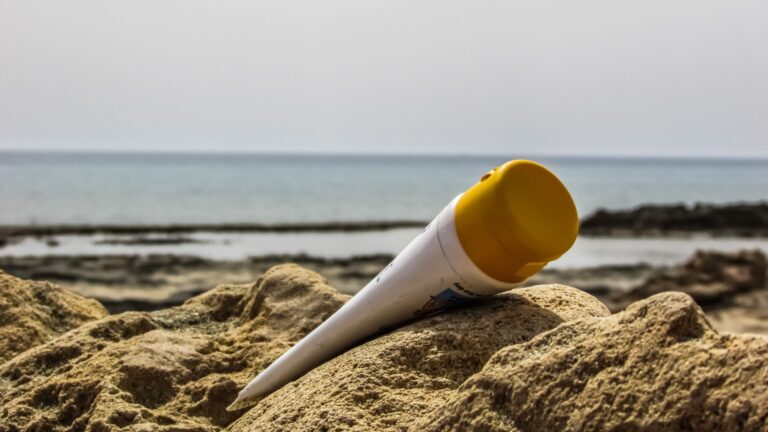
While eight million metric tons of plastic pollution enter the ocean annually, it’s estimated that six to fourteen thousand tons of sunscreen are also entering our oceans each year. The first you can see, the latter (known as “swimmer pollution”) you can’t really see and this makes it even more dangerous. These days most people are coming to understand just how dangerous plastic pollution is to the ocean due to increased education through social media channels. But there isn’t much awareness out there regarding the damaging effects that sunscreen lotions inflict on our sensitive marine animals and ecosystems.
While we have all been taught to use sunscreen as a way to protect ourselves from skin cancer, we are only starting to understand how harmful the chemicals contained in these products are to the oceans.
Skin cancer is the most common type of cancer. About 2,000 people die from basal cell and squamous cell skin cancer each year and older folks with suppressed immune systems have a higher risk of dying from these types of skin cancer, according to cancer.net.
Effects of sunscreen chemicals in our oceans
The average sunscreen product contains many harmful chemicals, many of which include synthetic organic molecules exactly like those used to make plastic. These molecules do not break down. Instead, they wash off your body once you enter the water and penetrate marine ecosystems, causing havoc and destruction.
Harmful chemicals in sunscreen include Oxybenzone, a common chemical that protects our skin from UV light. Once in the ocean, however, this particular chemical damages the DNA structures of coral reefs and their entire reproduction processes. This, in turn, causes bleaching, deformities, and growth anomalies in the coral. Coral reefs don’t just benefit the ocean, but healthy coral reefs provide billions of dollars in economic and environmental services, such as food, tourism, and coastal protection. The most vulnerable coral reefs under threat from these sunscreen chemicals include fringing reefs that are critical for protecting coastal regions from erosion. Not only that, but dangerous chemicals in sunscreens actually prevent the recovery and restoration of reefs that have already been damaged, creating a vicious cycle of degradation upon degradation.
Effects of sunscreen chemicals in humans
Research has shown that the damage Oxybenzone causes is even more far-reaching, creating gender shifts in fish that cause female fish to produce fewer eggs. If this chemical can affect reproduction in marine animals, imagine the effects on humans. Recent studies have shown that human females with higher concentrations of the chemical in their bodies had a much harder time falling pregnant, while the high concentration in males caused diseased sperm.
Effects of sunscreen chemicals in algae
Oxybenzone doesn’t only destroy certain coral reefs, it also impairs algae growth and photosynthesis, while harming other marine life in the process.
Algae contribute to a healthier ocean since they use up the carbon dioxide from the atmosphere, then release oxygen back. Algae also maintain a highly symbiotic relationship with various ocean organisms including sea sponges. Since the algae live near the sponges’ surface, they actually metabolize and produce sugar and oxygen that the sponges need for their very survival. The sponges, in turn, help to protect the algae from their natural predators in the ocean.
Krill feed primarily on algae. Krill are shrimp-like organisms that are fodder to many marine animals including whales, seals, and penguins.
The ocean is an ever-changing watery world filled with marine plants of every kind that are subjected to ocean currents and environmental conditions.
At times certain environmental conditions can cause cold, denser water to sink to the bottom of the ocean, thereby causing other waters to rise in replacement. When this happens you get algal blooms. When there are more algae, there are more compounds produced for organisms such as oysters, mussels, and ultimately, humans. But algae blooms can also be harmful to marine life since a proliferation of surface floating algae can diminish the sunlight reaching marine plants causing dead zones.
While algae blooms can be very problematic, certain algae are very necessary for the maintenance of ecosystems.
Regulatory agencies
There are many regulatory agencies monitoring the damage that chemicals have on our health. Including the European Chemical Agency that lists many chemicals most commonly used in sunscreen products in Europe. The list is called the Community Rolling Action Plan (CoRAP) and includes ingredients like Formaldehyde, Carbon Tetrachloride, and Methanol. Due to their potential threat to the environment and our personal health, this list has raised the ultimate possibility of a ban. In Hawaii, for example, bans on certain sunscreen product ingredients have already been implemented to safeguard coral reefs in certain coral hotspots.
Harmful chemicals in sunscreens
Another common ingredient in sunscreens is the preservative paraben that inhibits fungal and bacterial growth. Lower concentrations of this preservative can act as endocrine and pheromone disruptors. Higher concentrations can be acutely toxic to invertebrates.
According to savethereef.org you should avoid sunscreens containing these harmful chemicals:
- Oxybenzone
- Octinoxate
- Octocrylene
- Homosalate
- 4-methylbenzylidene camphor
- PABA
- Parabens
- Triclosan
- Any nanoparticles or “nano-sized” zinc or titanium (if it doesn’t explicitly say “micro-sized” or “non-nano” and it can rub in, it’s probably nano-sized)
- Any form of microplastic, such as “exfoliating beads”
Looking to the oceans for a solution to improve sunscreens
Just because your sunscreen might be labeled “organic” or have an “organic certification” doesn’t mean it’s safe for the environment. Several plant-based oils can also damage marine life. Take for example 3 common essential oils like neem, eucalyptus, and lavender that are present in some organic sunscreens. These oils act like insect repellants suggesting they are relatively toxic for invertebrates (crabs, squid, lobster, coral, etc).
Sunscreen is vital in protecting us from skin cancer and UVR damage. But what are the alternatives to commercial sunscreens that are damaging our marine life?
We can actually look to the oceans for protection against UV rays and sun damage. Many marine species who are exposed to the sun on a continual basis have effectively evolved to protect themselves from UVR damage. The way this works is fascinating.
Algae, for example, produces MAA (mycosporine-like amino acids) which act as natural UVR filters. These amino acids then make their way up the food chain. Once they reach coral and other marine life they are essentially stored in the very tissues exposed to UVR like skin, eyes, and eggs. MAA then absorbs the UVR and converts it to light and heat which isn’t broken down by the radiation. Scientists are only beginning to explore the potential that these compounds can have in the production of ocean-friendly sunscreens.
Reef-Safe Sunscreen
So before heading out to enjoy the beach this summer, grab a reef-safe sunscreen. This typically means that the sunscreen contains only mineral UV-blocking ingredients like oxide and titanium dioxide. Be aware that the label “Reef Friendly” isn’t regulated. Meaning that some products that contain this label don’t necessarily mean what they imply.
Check out this list of reef-friendly sunscreen products at Save the Reef (they also list the sunscreen products that are harmful to reefs). Be the exception on the beach this summer. Our marine life depends on humans educating themselves about the damaging effects of the chemicals we put on our skins.
For more information, watch our video: Ways to Protect Coral Reefs