Solutions for the seas.
Planetary Technologies’ Ocean-Based Carbon Removal
Planetary Technologies is the first climate technology to remove carbon from the atmosphere by using direct ocean capture. Planetary’s proprietary technology safely purifies mine waste into a mild, nontoxic antacid that is released into the ocean. This antacid rapidly enhances and speeds up the ocean’s natural ability to draw out and permanently sequester carbon from the atmosphere. The additional alkalinity in the ocean also restores damage caused by increased acidification.
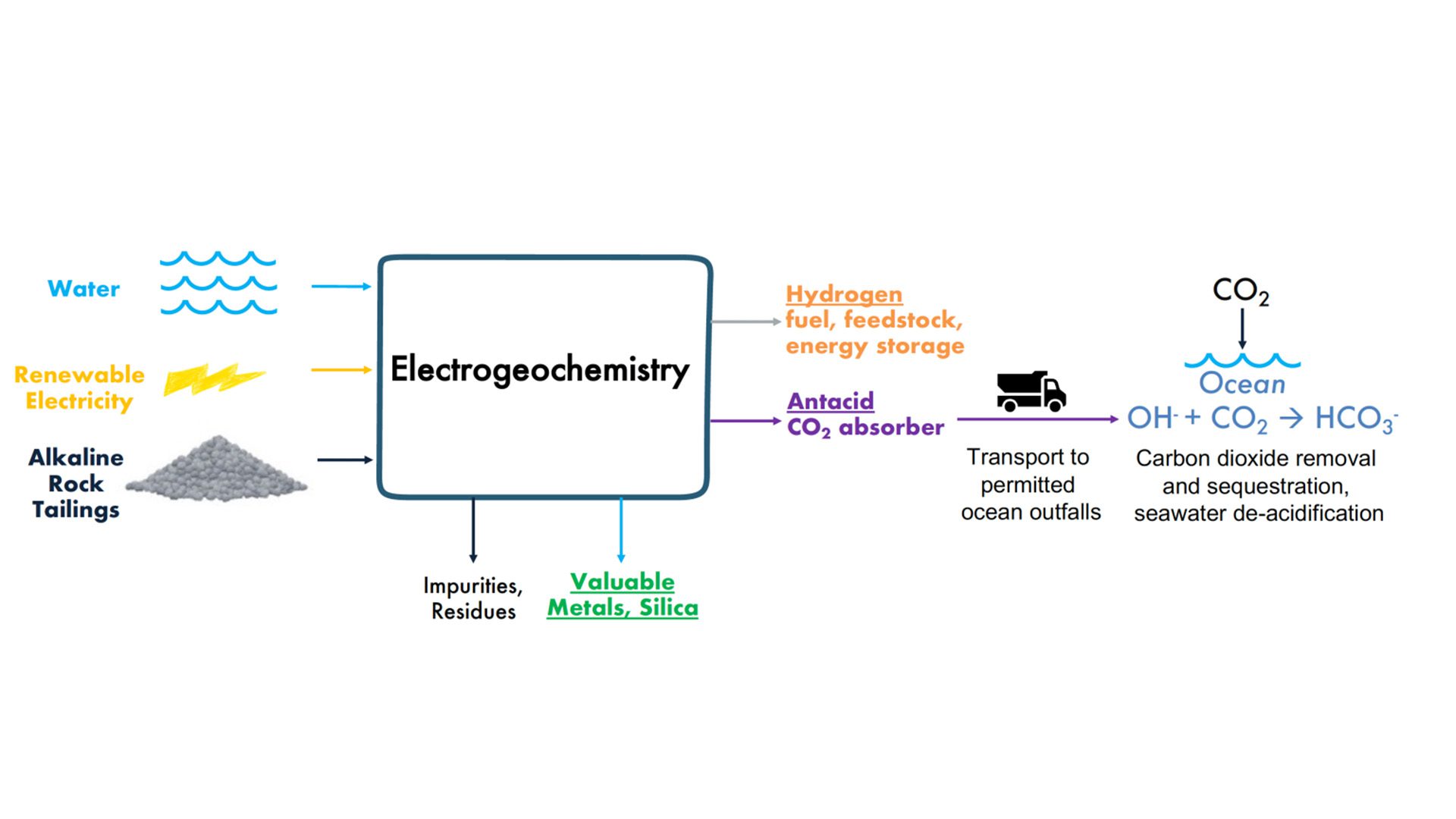
Additionally, the purification of mining rock produces clean, green hydrogen as a byproduct, which can be used as a zero-carbon fuel source to reduce the consumption of fossil fuels. If all of this wasn’t enough, Planetary’s three-pronged process also involves extracting metals from mining waste, which can be used in batteries. This is essential in promoting an electric-powered future.
In 2022, the company was awarded $1 million from Elon Musk’s XPRIZE Carbon Removal Milestone Award, which it plans on using to achieve a full-scale demonstration of its technology. As Planetary’s CEO Mike Kelland said,
“The global community agrees that we need a three-pronged approach to stop the harmful effects of climate change – adapt, reduce emissions and remove carbon – and Planetary’s process does all three, the most critical being our ability to remove carbon dioxide form the air”
Clearbot’s Trash Clean Up and Data Collection
An estimated 11 million pounds of waste are put into our oceans each year. Clearbot is attempting to lower this number with its Clearbot boats. These electric-powered, AI-enabled, and autonomous boats tackle the challenges of plastics, flood debris, and biomass in waterways.
For example, the three-meter-long Clearbot Neo autonomously collects floating garbage by systematically moving up and down designated sections of water. It skims the surface to scoop up floating trash onto its onboard conveyor belt and uses AI to recognize and log the types of trash collected. The trash is then properly disposed of based on its category. With 4 hours of battery life, Clearbot Neo allows a one-man team to deploy and capture hazardous and pollutant waste of up to 1-ton per day. See video on https://youtu.be/u2bApYIbCmw
Using its two-camera detection system, Neo also collects valuable data. One camera surveys the water’s surface to avoid marine life, navigational hazards, and other vessels. The second camera photographs each piece of trash that lands on the conveyor belt and transmits its image and location to the company’s data compliance system, hosted by Microsoft’s Azure platform. When the data from these two cameras are merged with other information like sea current and tide, the trash’s source and the water’s quality are more easily identifiable.
Saildrone’s Autonomous Vessels
Saildrone’s fleet of autonomous wind and solar-powered vessels collect real-time, high-quality data throughout the ocean. This data can be used to inform sustainable fisheries management, detect oil spills, conserve threatened species, map the seafloor, and help scientists understand how the climate is changing ocean ecosystems like coral reefs.
The company’s wing technology enables a mission duration of up to 12 months; its wind propulsion system allows the vehicles to travel at an average speed between two to six knots under wind power. To date, Saildrone’s vehicles have sailed over 800,000 miles with over 18,000 days at sea with little to no carbon footprint.
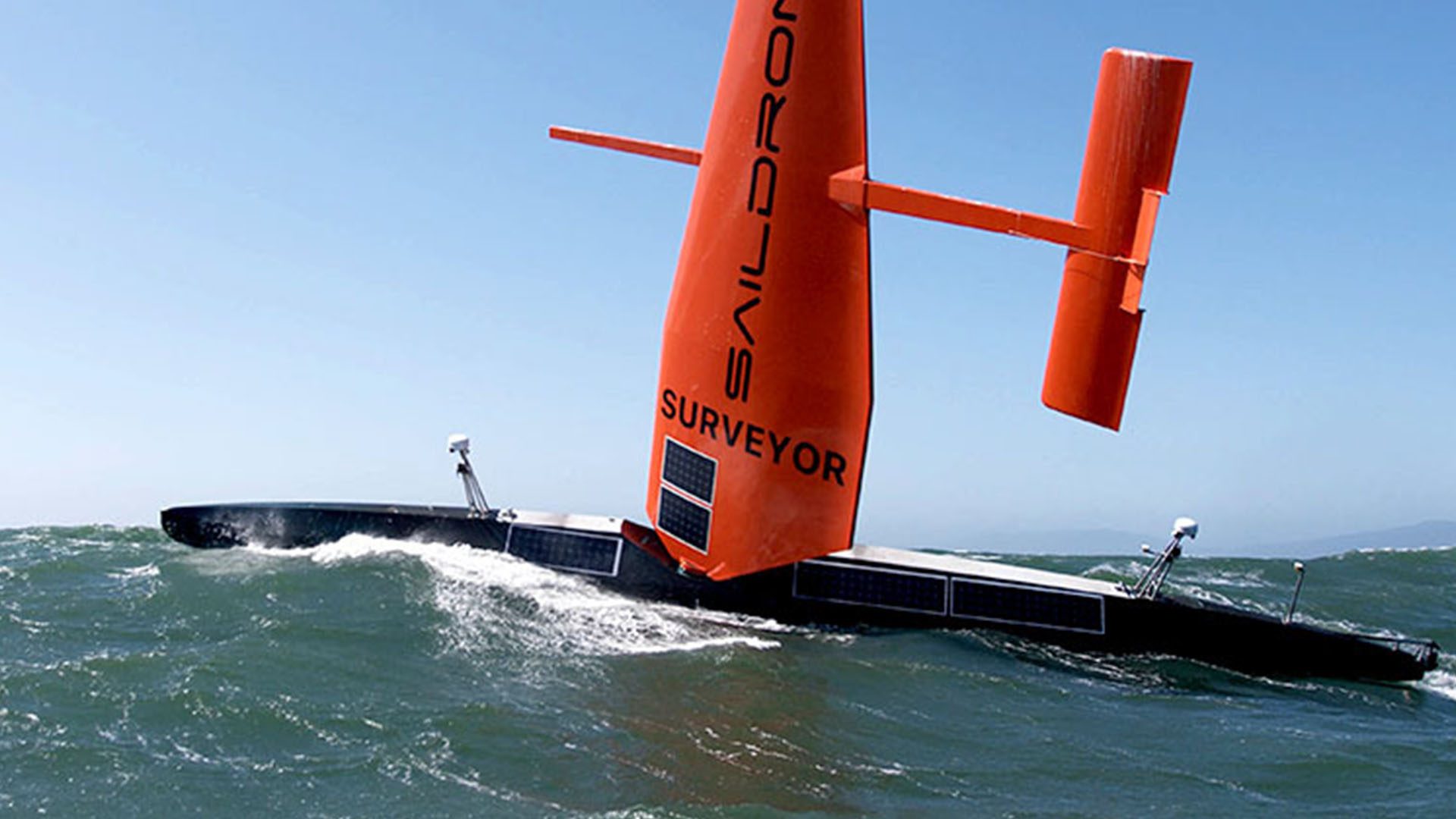
One of Saildrone’s vessels is the Saildrone Surveyor, which autonomously set sail in July 2021 from San Francisco to Honolulu. The Saildrone Surveyor was created for ocean mapping; its sensors look at underwater ecosystems and map the seafloor to a depth of 23,000 feet. Saildrone intends to map the entirety of Earth’s oceans in 10 years—80 percent of which is currently unmapped. Mapping the Earth’s oceans will help scientists understand climate change processes, the path and strength of tsunamis, and more.
SafetyNet Technologies’ Selective Fishing Light
Over 9 million tonnes of bycatch are caught globally every year, negatively impacting fishermen, the marine ecosystem, marine biodiversity, and fish stock. In an attempt to lower this number, SafetyNet Technologies created Pisces, a kit of 10 LED lights that fit fishing gear to allow more precise fishing. As a result, users can adapt to regulations, avoid fines, and fish more sustainably. See video on https://youtu.be/mcbNv_OhFkA
Pisces can be adapted in numerous ways depending on what color, intensity, and flash rate are used, allowing Pisces to work in multiple different fisheries. Its LED lights also significantly reduce bycatch by attracting some species of fish and scaring others away. As a result, Pisces can be adjusted to help catch more of your target species while reducing bycatch.
SafetyNet Technologies also created CatchCam, a robust underwater camera that allows users to see their gear in action under the ocean. This gives users insights into how fish behave in nets and if their bycatch mitigation methods, like square mesh panels, are working.
RanMarine’s WasteShark
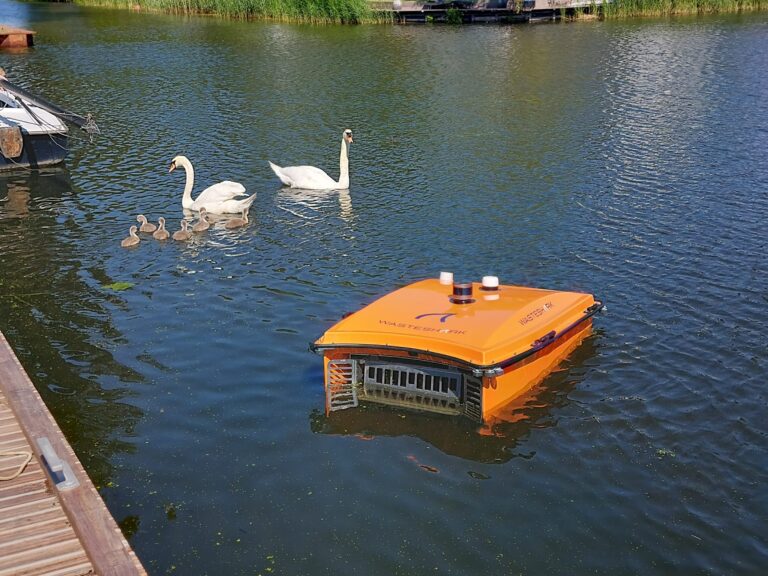
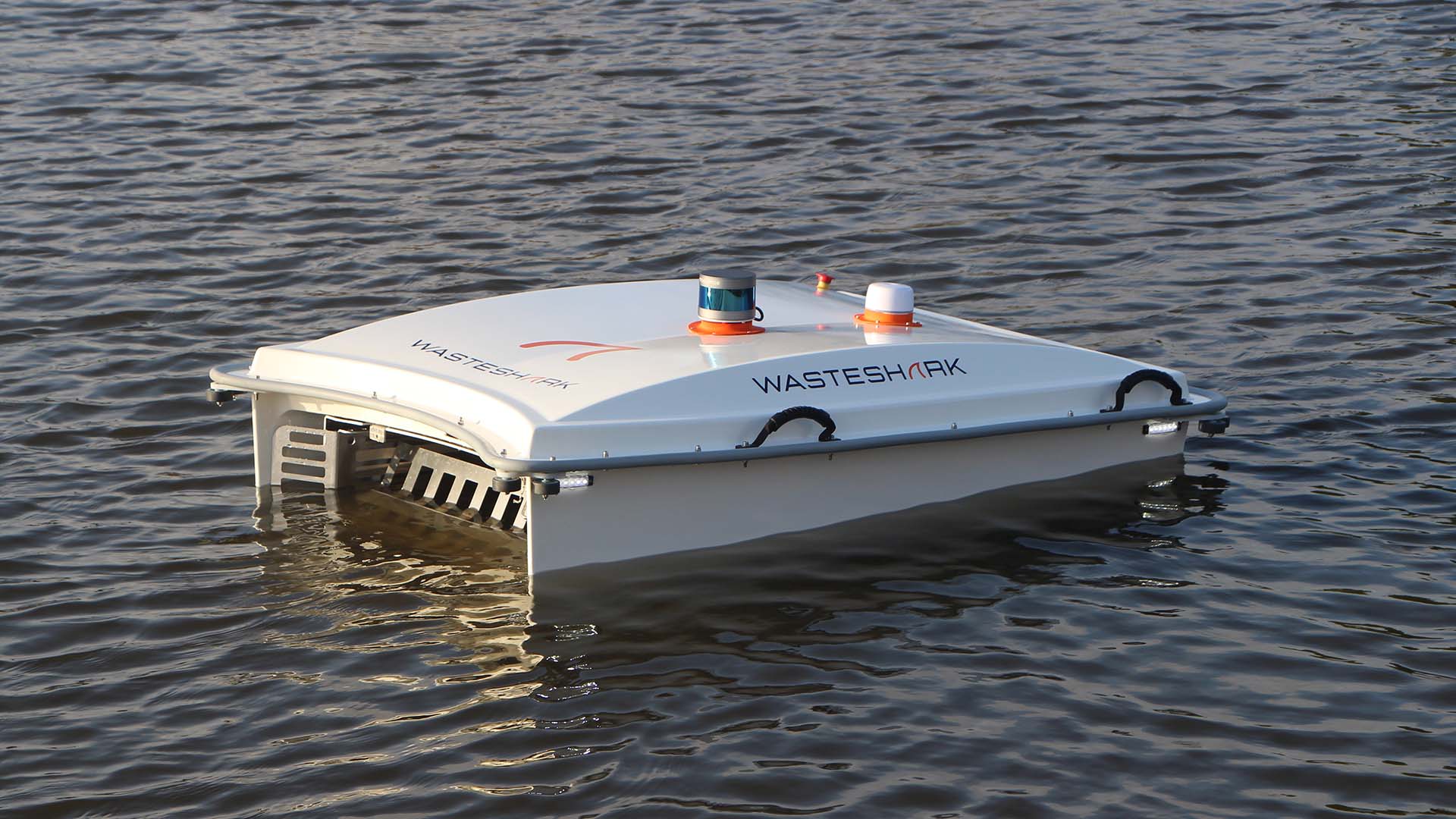
Created by RanMarine Technology, a robotic autonomy technology company, WasteShark is a small robotic device that removes floating waste, plastics, and harmful algae from the surface of the water. This autonomous surface vessel is emission-free and reduces the effects of plastic pollution on the Earth’s oceans. As WasteShark’s founder, Richard Hardiman told Tomorrow’s World Today,
“Our purpose is to develop technology to make our world a more livable place and ease the pressure humans are adding to our fragile water resources and ecosystems.”
The robot has 180 liters (47.5 gallons) of capacity, an 8-hour runtime, and can remove 1100 pounds of waste a day. Ran Marine’s DataShark can also collect live data to measure accurate water health quality. This vessel can monitor temperature, depth, dissolved oxygen, turbidity, blue-green algae, crude, refined oils, and more to identify potential contaminants early to minimize their impact on the environment.
At the Consumer Electronics Show in 2022, RanMarine also introduced the SharkPod, which is the world’s first autonomous floating docking station for waste-clearing drones. This tool will be able to deploy, dock, and charge up to five WasteShark drones at one time, allowing for a twenty-four-hour autonomous solution to remove waste from the water. Together with WasteSharks, the SharkPod would be able to remove up to 100 tons of debris and waste per month.