These drones look for trash in waterways

Water management - autonomous surface vessels

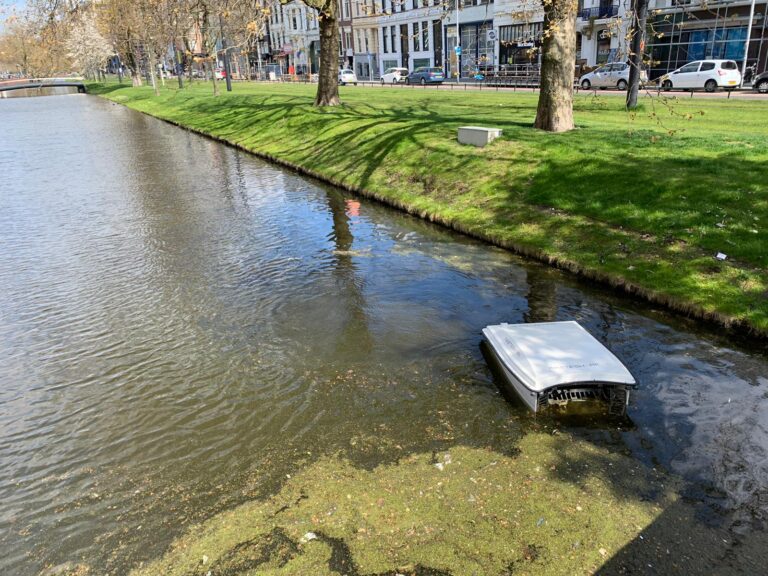
In a river in the Danish city of Århus, a small machine called the WasteShark now autonomously sails through the water collecting trash, bringing it to shore, and then recharging itself. Soon, a drone will begin flying through the air to help: Using a special lens that collects data to be crunched by a machine learning algorithm, that drone can identify pieces of plastic or other garbage and direct the sailing drone to pick them up. The system can also identify oil spills, which the WasteShark can help clean up with a special filter.

“We’re testing a technology that can be scaled in a lot of different ways,” says Martin Skjold Grøntved, a special consultant for the Danish Climate Ministry. While the small trash-eating drone isn’t new, the addition of the flying drone makes it possible to find more garbage more quickly. The sailing drone also hasn’t been used to clean up oil spills in the past, because without the drone overhead scanning the water, it wouldn’t be able to identify the oil.

he tech startup Kinetica worked with the agency to provide a data platform, running on Oracle Cloud Infrastructure, that makes the trash detection algorithm run quickly. This isn’t the first time they’ve helped equip drones to detect trash. Kinetica also worked with the nonprofit San Francisco Estuary Institute to test another project that uses drones to track how much waste is entering waterways to help understand how well waste-prevention efforts are working. In the past, that data was difficult to gather at a large scale. “Resources are limited, and city programs have only so much to put towards these efforts,” says Tony Hale, program director for environmental informatics at the San Francisco Estuary Institute. “Nonprofits have only so many people to put towards these efforts. And it’s a very time-intensive process to go out and just do the cleanups, first of all, let alone to count the amount of trash and then characterize it by certain categories. What this drone-based and machine learning-based method offers is a way to expand the geography.”

Read the full article by Fast Company – article

more news

The Tiny Guardians: How Microplastics are Breaking the Natural Cycle of Our Water

New research from the University of California San Diego has uncovered a hidden mechanism that is turning our lakes and coastal waters green.

A “Constitution” for the High Seas

A Historic Milestone: The Treaty Officially Becomes Law

The “Eye in the Sky” for Ocean Waste

Beyond the Horizon: Why 2026 is the Year We Finally “See” Plastic from Space

Flocean in the Deep: The Dawn of Subsea Desalination

By placing their desalination units on the seafloor at depths of 400 to 600 meters, Flocean uses the ocean’s own weight to push seawater through reverse-osmosis membranes.

IMO Sharpens Strategy for Zero Plastic Pollution by 2030

The International Maritime Organization (IMO) has recently reinforced its commitment to eliminating marine plastic litter from the shipping sector.

Ready to see our shark in action?

Get in touch for a live virtual demo or a quote.
Our team is ready to help.

Trusted by Port Authorities and Facilities Management Teams across the globe

Proven technology. Global Impact.

Don’t just take our word for it. Explore our case studies to see how our customers use data-driven autonomy to create cleaner, safer waters around the world.

Love Boat

Maintaining water quality in Italian harbours, marinas and inland waters to meet tourist standards whilst protecting the environment in a cost- and labour-efficient manner

BIC Consolidated

Maintaining pristine water quality across vast, debris-prone commercial waterfronts using traditional methods was labour-intensive, inefficient and lacked audit data

Leeds Waterfront Group

Leeds’ waterways collect tons of floating debris annually, overwhelming manual clean-up crews and threatening wildlife habitats along the River Aire, Leeds and Liverpool Canals

Our Technology

Advanced robotics designed to clean, monitor, and restore marine environments.

WasteShark

Manual & Accessible

The essential tool for calm waters

WasteShark +

Built for Professionals

Power and speed for marinas & ports

WasteShark + Pro

Intelligent Autonomy

LiDAR guided cleaning with data capabilities

CyanoShark

Harmful Algae Solution

Specialized filtration to remove harmful blooms and biomass

MegaShark

Industrial Capacity

Heavy-duty waste removal for ports and large waterways

RanMarine Connect

Unified Data Platform

Real-time water quality monitoring and fleet management

Schedule your demo

Book your 30-minute live demo with a RanMarine specialist.
(Subject to location and availability)

Cleaner waters, delivered to your inbox.

Join 2,000+ subscribers receiving the latest updates on marine technology and sustainability.

Submit a Support Ticket