Exclusive interview: H2O Global News’ Sion Geschwindt spoke with RanMarine CEO, Richard Hardiman, about water quality and how their autonomous drone – WasteShark – tackles polluted waterways
Published by H2O Global News
August is Water Quality Month – a time dedicated to the freshwater resources upon which we all depend. Maintaining and improving water quality is essential, but challenges such as pollution hamper these efforts.
Inland waterways like rivers and lakes are particularly susceptible. Chemicals, algal blooms, heavy metals, and bacteria are among the many threats to fresh water quality. Another is plastic.
While we tend to think of plastic pollution as a problem only affecting the world’s oceans, a lot of it originates and collects in freshwater systems before even reaching the sea.
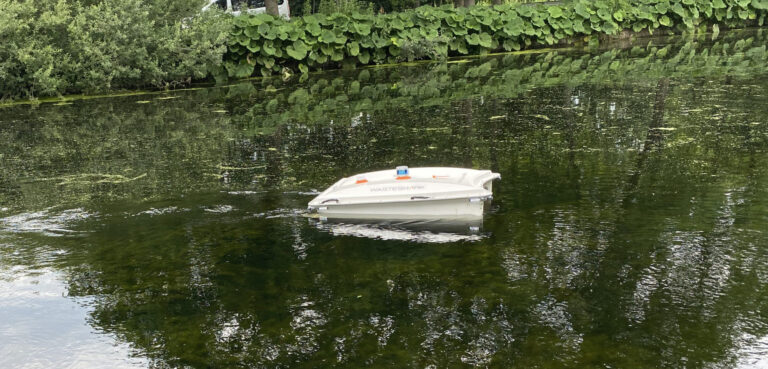
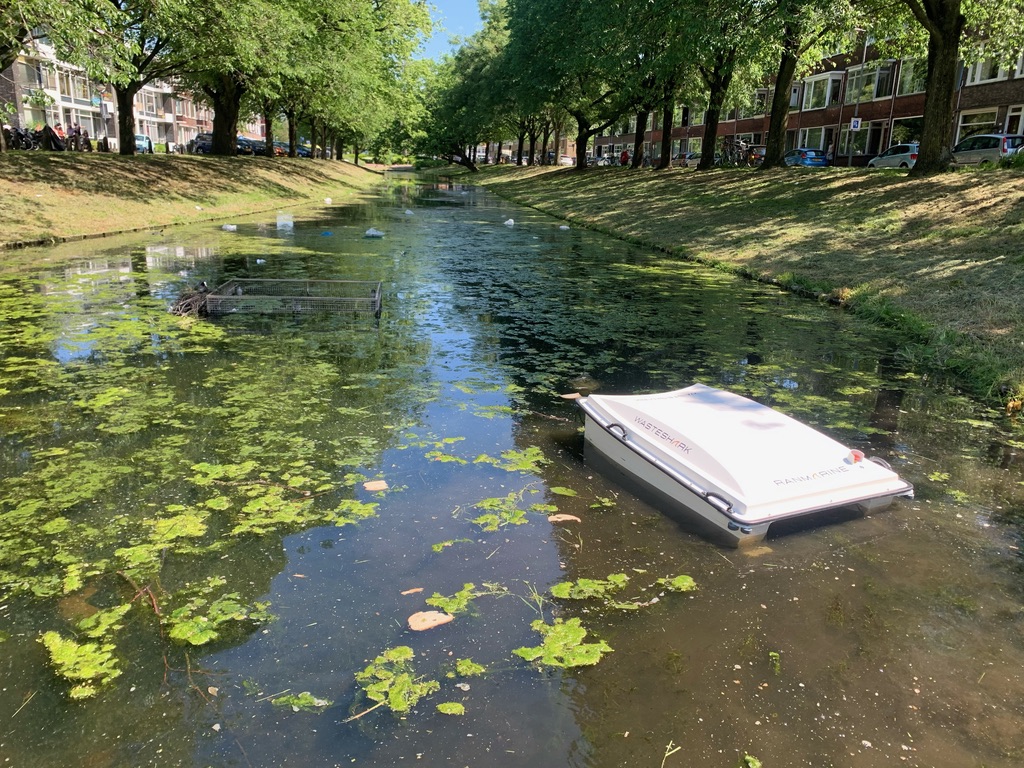
Clearing up inland waters and harbours of plastic waste is crucial, but no easy task. To tackle the problem head on, Dutch start-up RanMarine have developed an autonomous water surface vehicle (ASV) – called WasteShark – which removes floating pollution such as plastics, algae and biomass from water bodies throughout the world.
The plastic problem
Plastics got us to the moon, facilitated huge advancements in medicine and transformed the manufacturing industry. The world as we know it today would be unrecognisable if it weren’t for this durable, versatile, and often indispensable, material.
The UN Environment Programme (UNEP) estimates that more than 8.3 billion tons of plastic has been produced since the early 1950s. Yet, about 60% of that plastic has ended up in either a landfill or the natural environment.
The characteristics that render plastics so useful, also make them an environmental nightmare. Most of us have witnessed the shocking images of marine life tangled in fishing nets or beached whales who have ingested too much plastic waste. But the impacts go beyond the obvious.

River are the greatest source of plastic pollution to the ocean
Plastics break down into finer and finer particles – known as microplastics – which are often undetectable to the human eye. Microplastics can kill aquatic life and leach harmful chemicals into surrounding water bodies. These particles have been found at the top of Mount Everest and the bottom of the Mariana Trench – the deepest point in the ocean.
According to a study published last year, rivers are the dominant source of plastic pollution in the marine environment. Cleaning up waste before it enters the ocean is crucial.
If you have ever participated in a beach or river clean-up you will know that collecting waste manually is no easy feat. However, technology aimed at simplifying the task of removing water surface pollution has been scarce to date – precisely why RanMarine designed WasteShark.
WasteShark
WasteShark is an easy to operate, carbon neutral, robotic, waste-eating-machine. The drone can collect 500kg of plastic waste and biomass every day, while gathering water quality data in the process.
“We aim to improve water quality on two levels,” said RanMarine CEO, Richard Hardiman. “Firstly, by removing plastic, waste, and excess algae from the water surface, and secondly by gathering data on water quality changes and possible sources of pollution.”

RanMarine CEO, Richard Hardiman, stands next to a WasteShark drone
“Water pollution is fast becoming an everyday issue for both governments and citizens” – Richard Hardiman
RanMarine aim to empower people and organizations across the planet to restore aquatic environments. Their data-driven autonomous technology empowers cities, municipalities, ports, marinas, waste managers, scientists and action groups, to clean-up and monitor their waters.
“Water pollution is fast becoming an everyday issue for both governments and citizens,” said Hardiman. “Using robots to continuously remove trash means we won’t see ugly build-ups of trash on the water, lose plastic to the oceans and see further damage to the environment.”
Accurate data regarding water quality is essential for water managers to make informed decisions. WasteShark has the ability to run the same route multiple times over successive days, tracking the movement, dispersion and potential improvement of the water over time using the same GPS coordinates. It can test for water quality parameters such as temperature, pH, conductivity, depth, turbidity, fluorometers, nitrates and other chemicals.
“We need to understand what is in our water, where that pollutant is coming from and be able to create predictions about when anomalies may occur or track down the offending polluter. The more accessible that data is, the better,” said Hardiman.
Smart cities
Let’s face it, no one wants to spend all day every day cleaning up trash from waterways – but it’s a task that must be done. That is why automated, robotic solutions like WasteShark make so much sense – they do the dirty work, so we don’t have to.
To make the process even easier, RanMarine is currently working on a docking station that allows the drones to dock autonomously, remove their waste and recharge before going out on another mission, with very little human intervention.

WasteShark helps build smart cities
WasteSharks can be found operating across the world, from Singapore, to Sydney and Cape Town. They are helping many places throughout the world embark on their smart city journey.
Smart cities understand that designing better urban areas requires adopting digital technology that improves the well-being of its citizens and equips decision-makers with actionable data.
With 70% of the world’s population predicted to live in cities by 2050, deploying smart technologies like WasteShark can make urban areas more liveable, safe and sustainable. Is it going to solve the entire plastic crisis? Definitely not, but it’s a start.